




9 June 2026 – International Archives Day
By Carolin Gluchowski
PCPSCE – Print Culture and Public Spheres in Central Europe (1500–1800)
Every year on 9 June, International Archives Day invites us to reflect on the institutions, collections, and people who preserve the records through which societies remember, question, and understand themselves. In 2026, this reflection forms part of International Archives Week, celebrated from 8 to 12 June by the International Council on Archives under the theme #ArchivesForJustice: Rights, Memory & Futures. The theme highlights a crucial point: archives are not passive storehouses of the past. They are active infrastructures of knowledge, accountability, participation, and public spheres.
At first glance, this may seem far removed from the world of early modern print culture. Archives evoke boxes, catalogues, reading rooms, inventories, and preservation policies; print culture evokes presses, pamphlets, booksellers, readers, and public debate. Yet historically, the two have always been closely connected. Without archives, the history of printing, publishing, censorship, reading, translation, and public communication would remain fragmentary. And without print culture, many archives would lack some of the very materials that make early modern public spheres visible today.
This is precisely where the COST Action Print Culture and Public Spheres in Central Europe (1500–1800) situates its work. PCPSCE explores how printed texts, manuscripts, periodicals, translations, educational materials, religious publications, and administrative records shaped public communication across a multilingual and culturally diverse region. By bringing together researchers, librarians, archivists, digital humanists, and cultural heritage professionals, the Action investigates how knowledge circulated across borders, institutions, languages, and communities.
Archives as Knowledge Infrastructures
Long before the emergence of modern research libraries and digital databases, archives were already central to the organisation of knowledge. As Markus Friedrich has shown in The Birth of the Archive: A History of Knowledge, the early modern archive was not simply a place where documents were stored. It was a dynamic institution that helped shape political authority, legal memory, administrative practice, scholarly work, and everyday social relations.
An archive is not simply a repository in which the past is preserved, nor only a formal institution; it is first of all a set of practices through which documents are collected, ordered, used, protected, interpreted, and sometimes forgotten. At times, such broader archival practices coalesce into properly funded and organised institutions, but they also exist in more modest and everyday forms — from administrative records and scholarly collections to a box of letters kept at home — wherever knowledge, authority, rights, and memory are actively produced.
– Prof. Markus Friedrich, University of Hamburg, Germany.
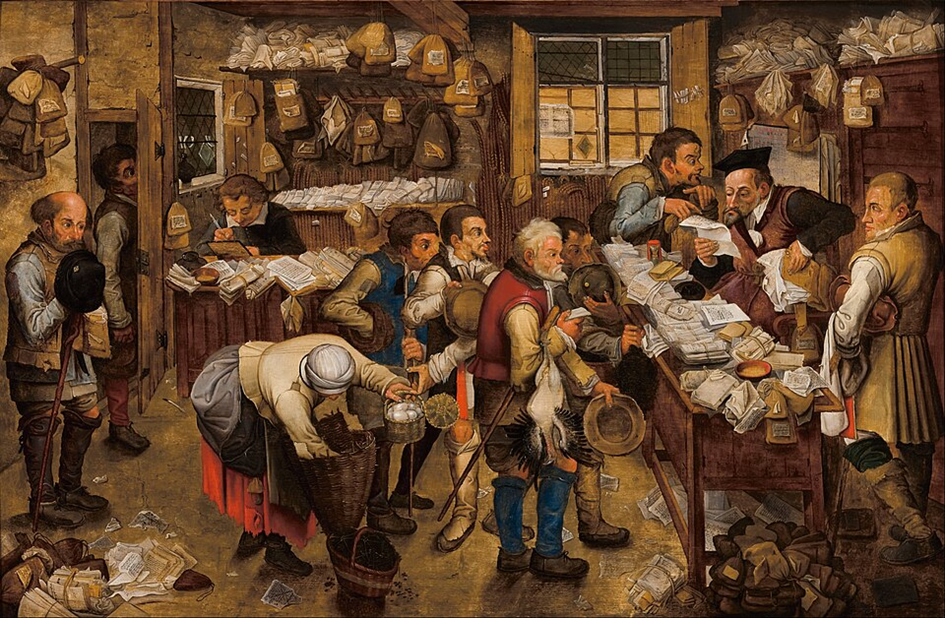
Early modern authorities, universities, churches, guilds, municipalities, courts, noble households, and printers all produced records that made social life legible: privileges, licences, correspondence, account books, inventories, contracts, censorship files, catalogues, minutes, petitions, and legal documents. The growing accumulation of such materials created new possibilities, but also new problems. Documents had to be selected, ordered, classified, protected, found, interpreted, and sometimes withheld. Archives were therefore never neutral containers of the past. They were working spaces in which knowledge was organised, power was exercised, rights were defended, and memory was shaped.
Archival records were often not created for us. They were created to manage work, regulate rights, document transactions, control information, resolve conflicts, preserve privileges, and stabilise authority. Yet today they allow us to reconstruct the social worlds behind printed books: who financed them, who printed them, who censored them, who transported them, who sold them, who read them, and who tried to suppress them. They also remind us that preservation and loss are closely connected. What survives in an archive is the result of historical decisions, institutional routines, accidents, absences, and sometimes deliberate acts of destruction.
In this sense, archives are not merely sources for print history. They are part of the history of print culture itself. They show us that books did not simply appear as finished objects. They emerged from networks of labour, regulation, negotiation, control, and trust. Every surviving licence, invoice, letter, marginal note, censorship record, or library catalogue can reveal the conditions under which knowledge entered the public sphere. To study archives, then, is not only to recover the past. It is to understand how past societies produced, managed, restricted, and transmitted knowledge.
Justice, Rights, and the Early Modern Archive
The 2026 theme Archives for Justice speaks powerfully to contemporary debates about accountability, inclusion, and memory. But it also encourages historians to ask how justice and access were shaped in earlier periods. Who had the right to publish? Who had the right to read? Whose voices were preserved, and whose were excluded? Which communities appear clearly in the archive, and which survive only indirectly, through traces left in administrative, legal, or ecclesiastical records?
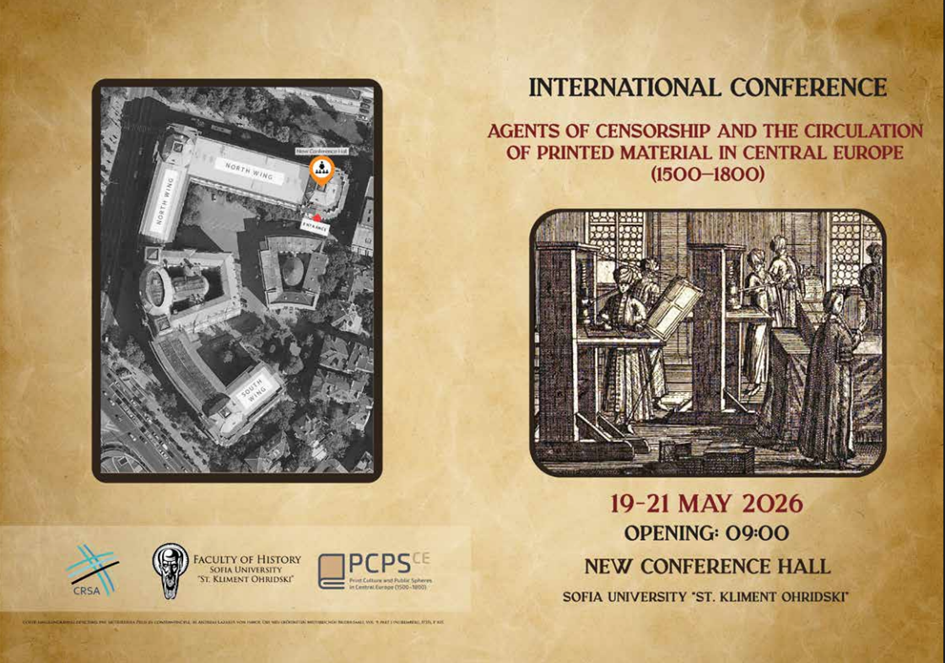
These questions are central to one of PCPSCE’s current research conversations: the international conference “Agents of Censorship and the Circulation of Printed Material in Central Europe (1500–1800),” held at Sofia University St. Kliment Ohridski from 19 to 21 May 2026. The conference brings together scholars working on early modern print culture to examine the actors, practices, and frameworks of censorship across Central Europe and neighbouring regions. Its programme highlights preventive censorship, self-censorship, regulatory frameworks, confessional control, the circulation of printed materials, and the ways in which printed texts crossed linguistic, religious, and political boundaries.
The conference reminded us that censorship was not only a matter of prohibition. It could involve licensing, correction, expurgation, delay, negotiation, self-censorship, institutional supervision, and informal pressure. Archives preserve the traces of these processes: decrees, permissions, correspondence, marginalia, catalogues, police regulations, ecclesiastical records, printers’ documents, and readers’ responses. They allow us to see censorship not simply as an obstacle to communication, but as part of the infrastructure through which early modern public spheres were shaped.
For scholars of Central Europe between 1500 and 1800, this perspective is especially important. The region was marked by linguistic diversity, confessional conflict, imperial politics, local privileges, shifting borders, and overlapping jurisdictions. Archives help us understand how printed communication moved through this complex landscape. They preserve evidence of control, but also of resistance, adaptation, and circulation. They show how texts crossed political and linguistic boundaries, how communities negotiated authority, and how publics formed around shared reading practices, controversies, and debates.
At the same time, archives remind us that access to the historical record has never been equal. Some actors appear frequently: rulers, institutions, male scholars, clergy, officials, and established printers. Others are harder to find: women, apprentices, translators, readers, religious minorities, displaced communities, and informal networks of exchange. The task of historical research is therefore not only to consult archives, but to read them critically: to ask how records were produced, why they survived, and what kinds of silence they contain.
Why Archives Matter for Public Spheres
International Archives Day is therefore not only a celebration of preservation. It is a reminder that public life depends on records: on the ability to document decisions, contest claims, remember experiences, and transmit knowledge across generations. Archives make accountability possible, but they also make imagination possible. They allow us to reconstruct past publics and to ask how future publics might be made more open, inclusive, and just.
For PCPSCE, archives are essential partners in this work. They help us trace the histories of print culture and public spheres across Central Europe, but they also challenge us to think carefully about the infrastructures that sustain research itself. Every archival document is both a trace of the past and a responsibility in the present.
On this International Archives Day, we therefore celebrate archives not only as repositories of memory, but as living spaces of inquiry, collaboration, and justice. From early modern print shops to today’s digital platforms, the circulation of knowledge has always depended on what societies choose to preserve, how they describe it, who can access it, and how critically we learn to read it.
Literature and Further Reading
International Council on Archives. International Archives Week 2026: Archives for Justice – Rights, Memory & Futures.
International Council on Archives. What are archives?
Farge, Arlette. The Allure of the Archives. New Haven: Yale University Press, 2013.
Friedrich, Markus. The Birth of the Archive: A History of Knowledge. Ann Arbor: University of Michigan Press, 2018.
Stoler, Ann Laura. Along the Archival Grain: Epistemic Anxieties and Colonial Common Sense. Princeton: Princeton University Press, 2009.
Steedman, Carolyn. Dust: The Archive and Cultural History. Manchester: Manchester University Press, 2001.