



September 2026 – European Heritage Day
By Carolin Gluchowski
PCPSCE – Print Culture and Public Spheres in Central Europe (1500–1800)
Every year between August and November, European Heritage Days invite people across the continent to enter buildings, encounter collections, and rediscover the stories carried by places and objects. The 2026 shared theme, Heritage at Risk: Revive, Resist, Reimagine, asks a particularly urgent question: what do we stand to lose, and what forms of knowledge, cooperation, and participation are needed to carry heritage into the future?
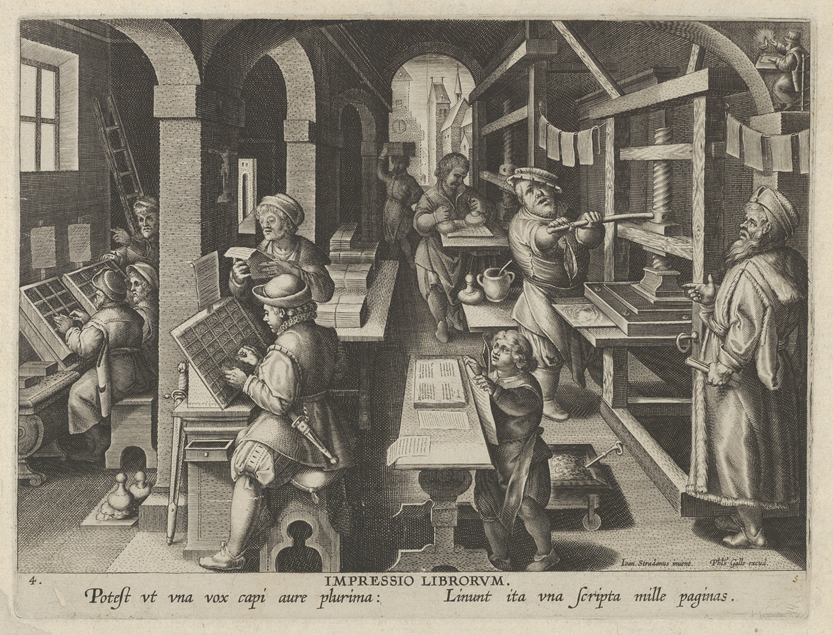
At first glance, a campaign famous for opening monuments may seem some distance from the history of print. Yet print culture is cultural heritage in the fullest sense. It includes books, pamphlets, newspapers, broadsheets, maps, images, and manuscripts; but it also encompasses paper mills and printing workshops, type and presses, binding and collecting, translation and reading, cataloguing and conservation. These objects and practices helped people communicate across distance, organise knowledge, negotiate authority, and form publics. They are central to the work of PCPSCE.
Between 1500 and 1800, printing transformed the scale and speed at which words and images could circulate. It supported religious reform, education, administration, commerce, scholarship, and entertainment. It also served regulation, censorship, confessional discipline, propaganda, and exclusion. Printed communication did not create a single, open public sphere. It contributed to multiple and often competing public spheres whose boundaries were shaped by language, literacy, money, law, gender, confession, and political power. Preserving print heritage therefore matters not only because old books are beautiful or rare, but because they preserve evidence of how participation itself was enabled, limited, and contested.
Print Culture Is Cultural Heritage
Heritage often enters the public imagination as stone, timber, landscape, or monumental art. A printed page can look quieter and more ordinary. But every early modern book is also a material event. Its paper may disclose a mill and trade route; its type and ornaments may identify a workshop; its binding may show reuse and repair; handwritten corrections, ownership marks, stains, and annotations may reveal readers who appear nowhere else. The object records not only what a text said, but how it was made, moved, handled, valued, altered, and remembered.
Printed matter did not live alone. It circulated alongside manuscripts, pictures, performances, sermons, letters, and oral communication. A printed book might be copied by hand, a prohibited work translated or adapted in manuscript, a newspaper read aloud in a public room, or a devotional text marked by generations of users. Safeguarding this heritage therefore means preserving relationships between media as well as individual objects. A scan of one page, detached from its binding, provenance, companion texts, and patterns of use, can reveal much – but it cannot tell the whole story.
Central Europe makes these relationships especially visible. The region’s early modern book worlds crossed shifting political borders and connected many languages, confessions, legal systems, and commercial centres. Materials now held in different countries may once have belonged to the same route of production, exchange, translation, or reading. Modern national catalogues are indispensable, but their boundaries can obscure older connections. This is why PCPSCE approaches print culture comparatively and transregionally, bringing together research on public and legal spheres, materialities, and the relationship between texts and ideas.
What Is at Risk?
The most visible risks are physical. Paper, parchment, leather, wood, ink, and metal are vulnerable to water, fire, mould, pests, unsuitable storage, and sudden environmental change. Historic libraries, archives, workshops, and print collections can be damaged by neglect, redevelopment, natural disasters, and war. Climate change intensifies several of these pressures, while limited staff and funding can make even well-known collections difficult to document and protect.
Conflict makes this vulnerability brutally immediate. As of 29 July 2026, UNESCO had verified damage to 545 cultural sites in Ukraine, including 22 libraries and five archives. For a European network that includes Ukrainian colleagues and works with sources from the region, heritage at risk is not an abstract slogan. Scholarly solidarity includes listening to local expertise, sustaining international attention, sharing documentation and skills, and helping dispersed knowledge remain visible without claiming ownership over it.
But documentary heritage can also disappear without a single object being destroyed. A collection may remain uncatalogued, described only in a local inventory, or inaccessible because its metadata cannot be searched across languages and systems. Cheap and short-lived forms – pamphlets, news sheets, almanacs, primers, invitations, songs, schoolbooks, and other ephemera – were less likely to be collected in the first place. Handwritten interventions in printed books may receive only cursory description. The voices of women, craftspeople, translators, religious and linguistic minorities, itinerant traders, and non-elite readers often survive indirectly, scattered across copies and institutional records. What remains unseen is more easily judged unimportant; what is judged unimportant is more easily lost.
Digitisation is essential, but it is not a self-sufficient rescue. Digital images widen access and can protect fragile originals from repeated handling. At the same time, digitisation always involves selection. Images without reliable metadata and context may be technically online yet practically undiscoverable; incompatible platforms can keep related evidence apart; and digital files require continuing maintenance. The UNESCO Recommendation on Documentary Heritage and the Faro Convention both make clear that digital access and the conservation of existing heritage must reinforce one another. A digital surrogate is a new route to an object, not a reason to abandon the object itself.
Revive, Resist, Reimagine: A PCPSCE Agenda
The three verbs chosen for European Heritage Days 2026 offer a useful framework for thinking about what a research network devoted to print culture can contribute. PCPSCE is not a conservation service, and it cannot replace the institutions and professionals who care for collections on the ground. Its distinctive strength lies elsewhere: it can connect evidence, expertise, people, and institutions across borders, and it can make vulnerable or overlooked heritage more findable, interpretable, and publicly meaningful.
Revive: Reconnect Objects, Practices, and People
To revive print heritage is not to recreate an idealised past. It is to restore relationships that time and cataloguing have separated. Researchers can compare surviving copies, reconstruct lost publications from inventories and correspondence, map routes of trade and translation, and recover the work of typefounders, papermakers, compositors, press workers, correctors, binders, booksellers, carriers, translators, collectors, and readers. This turns a rare book from an isolated treasure into evidence of a wider social and material world.
The Action’s planned open-access compendium and database of data and tools can support this work by bringing dispersed scholarship and resources into conversation. Training schools, workshops, Short-Term Scientific Missions, and collaboration among researchers and cultural heritage professionals can transmit specialist knowledge to a new generation. Revival, in this sense, means renewing the capacity to ask connected questions of fragmentary evidence – and sharing the methods needed to answer them.
Resist: Keep Plural Histories Visible
To resist is to recognise that loss is also produced by the stories we choose to tell. Central European print culture has too often been divided into modern national containers or treated as secondary to narratives centred elsewhere. A transnational and multilingual approach resists those habits. It makes room for overlapping centres and margins, small-language print cultures, confessional and commercial networks, hybrid manuscript-print practices, and actors who sit outside established canons. It also asks who benefited from circulation, who faced barriers, and who was rendered silent.
Resistance also requires the preservation of difficult evidence. Early modern print carried polemic, prejudice, disinformation, coercion, and propaganda as well as learning and debate. To safeguard such materials is not to endorse their messages. It is to make them available for critical interpretation, so that histories of censorship, exclusion, and manipulation cannot be simplified or denied. Context is part of preservation.
Reimagine: Build Access Across Borders
To reimagine print heritage is to use new tools without reducing heritage to data. Shared vocabularies, interoperable metadata, linked catalogue records, maps of circulation, corpus analysis, and carefully supervised machine-learning methods can reveal connections no single catalogue or scholar can see. Used transparently and with human review, digital approaches can help reunite editions and copies virtually, identify patterns across languages, and expose gaps in our knowledge. The goal is not merely to reproduce pages on a screen, but to reconstruct the networks and choices that made those pages matter.
Reimagining must also be public-facing. Collection spotlights, exhibitions, translations, teaching materials, podcasts, workshops, and accessible research stories can invite wider audiences into the process of interpretation. Local communities may hold knowledge about former libraries, family collections, buildings, ownership marks, and craft traditions that institutional records do not contain. Meaningful participation treats that knowledge as expertise and makes communities partners rather than passive audiences.
From Collections to Heritage Communities
The Council of Europe’s Faro Convention places people and human values at the centre of cultural heritage. It describes a heritage community as people who value particular aspects of heritage and wish to sustain and transmit them to future generations. This perspective is especially productive for print culture. A book becomes heritage not simply because it is old, but because people continue to study it, care for it, question it, and connect it to present concerns.
European Heritage Days themselves create a temporary public sphere around heritage. Visitors, curators, volunteers, scholars, and local communities meet to decide what deserves attention, how it should be interpreted, and who should be able to take part. These are also questions at the heart of PCPSCE. The history of early modern print reminds us that access has never meant only opening a door. It depends on language, description, education, affordability, physical accessibility, and the freedom to interpret and debate.
When encountering a printed object or collection, six simple questions can open these wider histories:
- What materials, tools, and skills were needed to make it?
- Through which hands, languages, institutions, and places did it move?
- Who could produce, buy, borrow, hear, or read it – and who was excluded?
- How was it licensed, censored, translated, altered, annotated, or reused?
- Why did this object survive, and what comparable evidence has disappeared?
- What would make it understandable and accessible to more people today?
Questions like these move us beyond celebration alone. They connect the care of objects to the study of power, participation, and public communication. They also show why cooperation among scholars, libraries, archives, museums, educators, digital specialists, and communities is not an optional extra: no single profession or country holds the whole story.
Keeping the Past in Circulation
On European Heritage Days 2026, we invite visitors to look beyond the monumental and the canonical. In a library, archive, print museum, church, school, or historic house, a modest pamphlet, annotated prayer book, worn primer, newspaper fragment, reused binding, or printer’s account may carry a history that crosses borders and links private experience to public life. Ask not only what the object says, but what made its circulation possible – and what now threatens its future.
Protecting print heritage is not an exercise in nostalgia. It preserves evidence of how societies learned, believed, traded, argued, governed, excluded, resisted, and imagined change. If public spheres are made through circulation, safeguarding their heritage means keeping the past in circulation too: physically secure, intellectually open, digitally discoverable, critically interpreted, and available to the communities who will carry it forward.
Literature and Further Reading
Council of Europe. European Heritage Days 2026: Heritage at Risk – Revive, Resist, Reimagine.
European Commission. European Heritage Days.
UNESCO. Damaged Cultural Sites in Ukraine Verified by UNESCO. Updated 30 July 2026.
Bruni, Flavia, and Andrew Pettegree, eds. Lost Books: Reconstructing the Print World of Pre-Industrial Europe. Leiden and Boston: Brill, 2016