




By Mykhailo Tupytsia
On the 18–20 June 2026, the 18th annual USTC Conference took place. This year it was dedicated to the theme “Print and Education”. This conference has been held annually since 2011 at the University of St Andrews. The Universal Short Title Catalogue (USTC), developed at and hosted by the University of St Andrews since 2007, is a collective catalogue of all the books published in Europe and its overseas colonies between the invention of printing and 1700. The USTC research community also coordinates top-level academic events and research. Among the most famous and visible outcomes of the work is the publishing series the Library of the Written Word, edited by Andrew Pettegree and Arthur der Weduwen. In the field of early modern book culture research, USTC is among the most influential and prestigious institutions in the world.
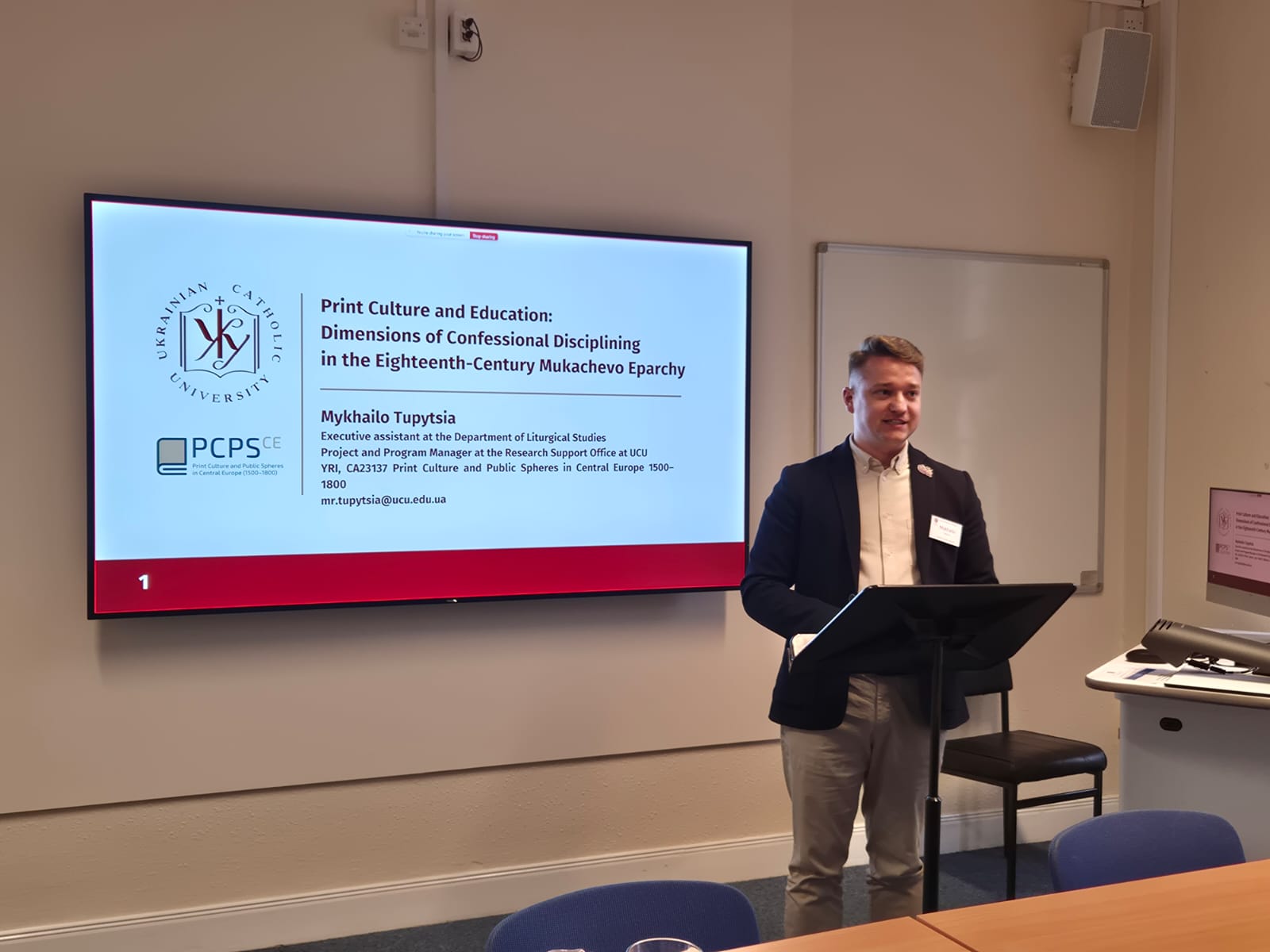
My participation in the conference was made possible by the generous support of the COST Action Print Culture and Public Sphere in Central Europe 1500–1800 and a travel grant from the Science Foundation of the Ukrainian Catholic University.
For participation in the conference, I prepared a paper on the topic Print Culture and Education: Dimensions of Confessional Disciplining in the Eighteenth-Century Mukachevo Eparchy. In the presentation, I tried to analyze the role of education in the process of confessional disciplining of the community of the Mukachevo Eparchy during the 18th century. I focused on three, in my opinion, important components of this process: attempts at reform, educational institutions for the clergy and laity, and the role of catechisms and primers publication. In the first section, I briefly described the attempt to reorganize the spiritual and administrative state of the eparchy through the reforms of bishop Joseph de Camillis (1690–1706), the adoption of the resolutions of the 1720 Zamość Council on the territory of the Mukachevo eparchy (1726–1727), and some regulations of the Vienna Synod of 1773. In the second section, I named and described the main educational institutions for the clergy and laity: Jesuit universities and seminaries in Trnava (Slovakia) and Eger (Hungary), the “Mukachevo Theological School,” which later became the Uzhhorod Three-Holy Seminary, as well as the very ambitious educational project of Bishop Mykhailo Manuel Olshavsky. If information about the first two examples can be found somewhere in the scientific literature, then the third one will be available in a future publication. The third segment of the presentation was devoted to the characteristics of book monuments that were in use in parishes and educational centers: the catechism (Trnava, 1698) and primer (Trnava, 1699) of bishop Joseph de Camillis, the catechism of bishop George Gennadius Bizantsii, the Latin-Ruthenian (Old Ukrainian) primer catechism (Cluj, 1746) of bishop Mykhailo Manuel Olshavsky, the primer (Vienna, 1770) of bishop Ivan Bradach.
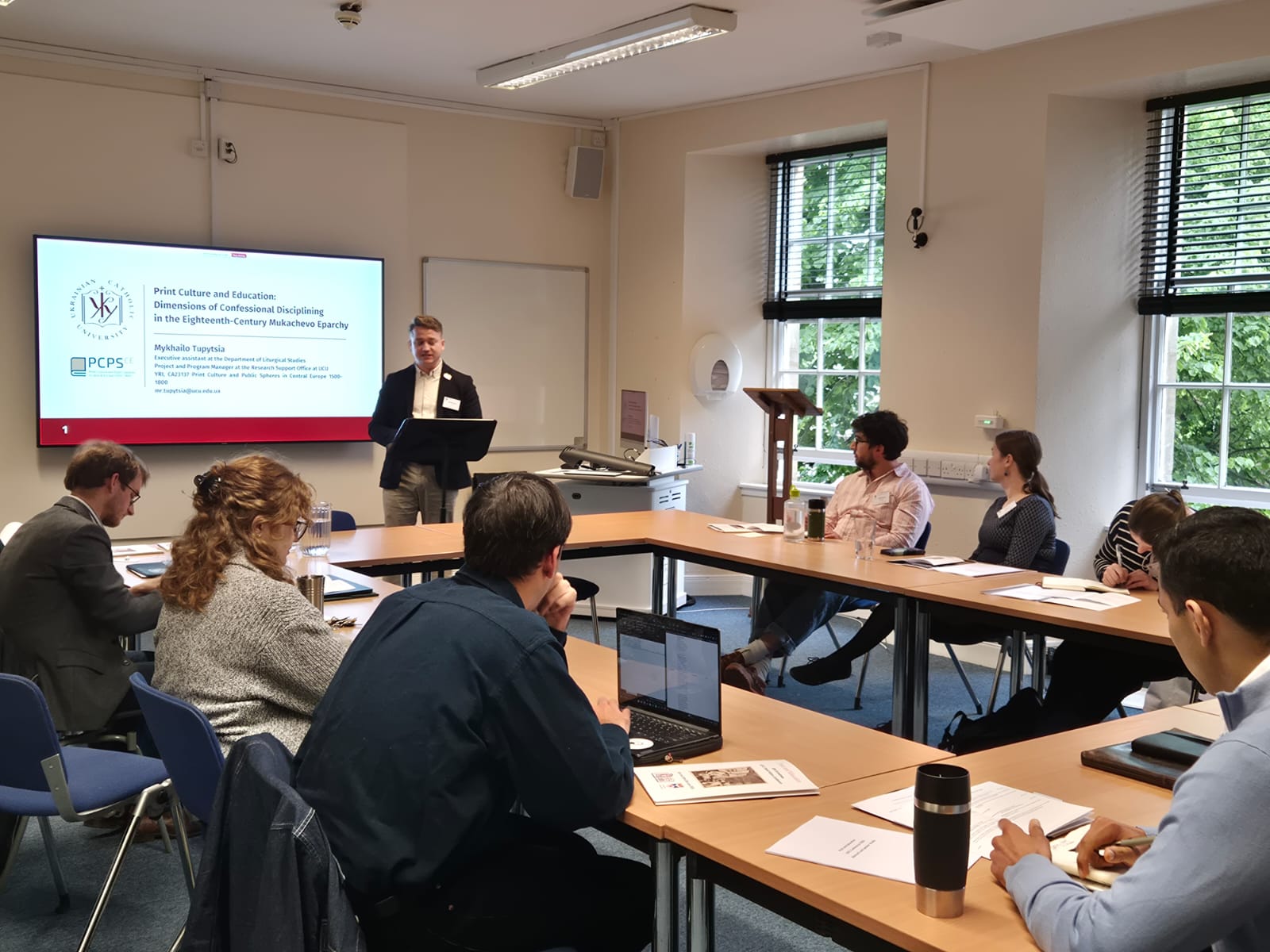
The revised materials in English are planned to be published in a volume of the Library of Written Word series by De Gruyter Brill, edited by Chloe Akers-Brewer and James Fox.
Next year, the USTC conference will be dedicated to examining the manner in which print culture affected the communication of law in early modern Europe. The title of the 2027 USTC Conference is “Legal Use of Print in Early Modern Europe: Function, Materiality and Circulation”. The link to the CfP is available here.
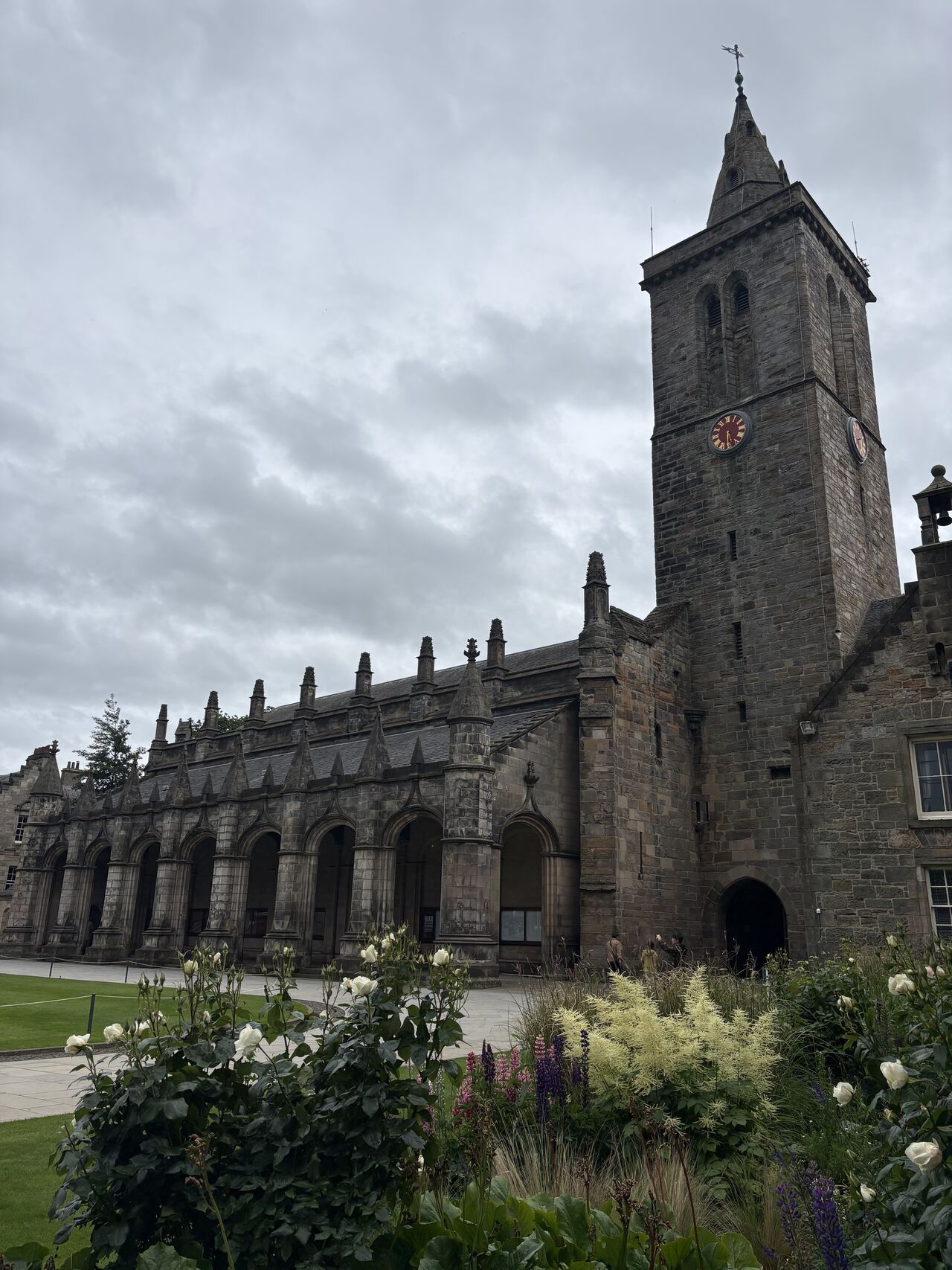
Overall, the conference brought many new acquaintances, interesting conversations and meetings with old friends. Although I was unable to adapt to the Scottish weather, or in other words, the maritime climate, it was really a very interesting and long-awaited experience.