




By Carolin Gluchowski
From a Choir Floor to the Pacific Coast
In February 2026, the Renaissance Society of America (RSA) Annual Meeting in San Francisco became a forum for some of the smallest and most fragile artefacts of late medieval devotional culture. In my paper “Circulating Devotion: Image Exchange Between Convents and City in Late Medieval Lüneburg”, I brought to the RSA stage a group of devotional images from the Cistercian convent of Wienhausen in northern Germany—objects once handled quietly by nuns in the privacy of the choir, now mobilised to address much larger questions about circulation, media change, and participation in premodern Europe.
Presenting this material in a global scholarly setting allowed a local devotional archive to be reframed within current debates on media history and the formation of publics. These debates also lie at the heart of the COST Action Print Culture and Public Spheres in Central Europe (1500–1800) (PCPS-CE), which seeks to understand how knowledge circulated, how participation was structured, and how multiple publics emerged through complex media constellations long before the modern age of mass print. From this perspective, the devotional images from Wienhausen are not marginal survivals. They are central evidence for how devotional practices were materially organised and socially sustained across convents, cities, and regions in the fifteenth and sixteenth centuries.
Small Images and the Question of Scale
The visual culture of late medieval convents is often imagined in terms of scale and monumentality: embroidered altar frontals, sculpted retables, or expanses of painted wall. The objects at the centre of my RSA paper deliberately resist this expectation. I focused instead on a group of thirteen paper reliefs from the Cistercian convent of Wienhausen—small-format devotional images depicting motifs such as the Man of Sorrows, the Five Wounds, the Holy Face, and the Virgin and Child. Made of painted papier-mâché, these objects are lightweight, fragile, and visibly worn. Their warped surfaces, rubbed pigments, and frayed edges bear unmistakable traces of repeated handling, pointing to a devotional life grounded not in distant viewing but in intimate, tactile use.
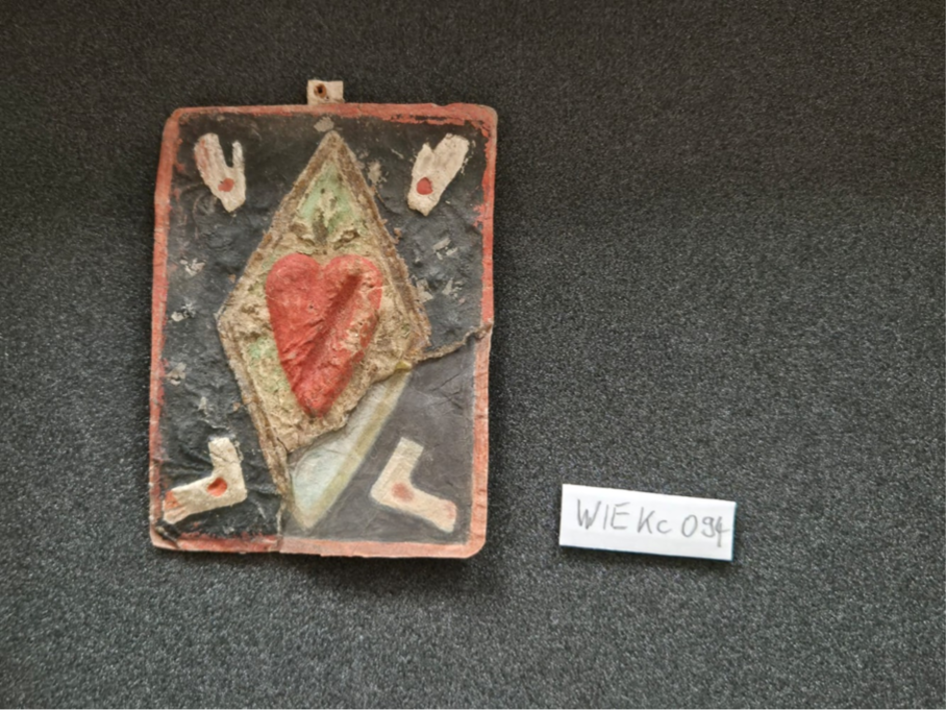
Figure 1: The Five Wounds of Christ, paper relief, 9.5 × 7.2 cm, 15th century (?), with added strip at the upper edge for hanging, Kloster Wienhausen, WIE Kc 094. © Carolin Gluchowski (with thanks to Kloster Wienhausen for permission to publish).
Their smallness is not incidental. It made these objects portable, repeatable, and adaptable. They could be passed from one person to another, enclosed in letters, inserted into books, or placed in intimate devotional settings. Rather than addressing a distant viewer, they demanded close, tactile engagement. In material terms, they were ideally suited to circulation.
Crucially, the Wienhausen reliefs are not isolated artefacts. They belong to a broader devotional landscape shared by the women’s convents of the Lüneburg region—Lüne, Ebstorf, Medingen, Isenhagen, Walsrode, and Wienhausen—communities founded between the tenth and thirteenth centuries and closely connected through reform movements, kinship networks, and economic ties. Together, these houses produced a remarkably coherent devotional culture, documented in manuscripts, textiles, images, and, above all, letters.
Circulation as a Devotional Practice
One of the core arguments of my paper, and one that resonates strongly with PCPS-CE’s focus on circulation and participation, is that shared devotion was actively produced through movement. Small devotional images rarely travelled alone. They circulated together with letters that framed, interpreted, and instructed their use.
The three Lüne letter books, dating from around 1460 to 1555, preserve roughly 1,800 letters in Latin and Middle Low German written at a moment of reform and emerging confessional tension. Currently being edited and studied in the project The Nuns’ Networks, led by Prof. Henrike Lähenmann (Oxford) and Prof. Eva Schlotheuber (Düsseldorf), this corpus offers an exceptional window onto the everyday practices of communication within and beyond women’s convents. More than thirty letters explicitly mention the exchange of devotional images—Veronicas, depictions of the Five Wounds or the Resurrection, Marian images, and other Christological motifs—revealing how visual objects circulated together with texts. Addressed not only to nuns in neighbouring houses but also to secular women linked by family ties, these letters illuminate the social reach of conventual networks and show how devotional practices were coordinated across enclosure through the paired movement of words and images.
What makes these letters so revealing is that they do not merely document exchange. They author practice. A letter tells its recipient when to look at an image, how to contemplate it, and what kind of prayer or affect should accompany the act of seeing. Biblical quotations, patristic references, and short homiletic passages turn the image into a scripted object. The image arrives already embedded in interpretation. In this way, letters and images work together as a media ensemble. The letter teaches the image how to function; the image gives the letter durability and repeatability. Devotion is no longer tied to a single liturgical moment but becomes a practice that can be reactivated again and again, across distance and over time.
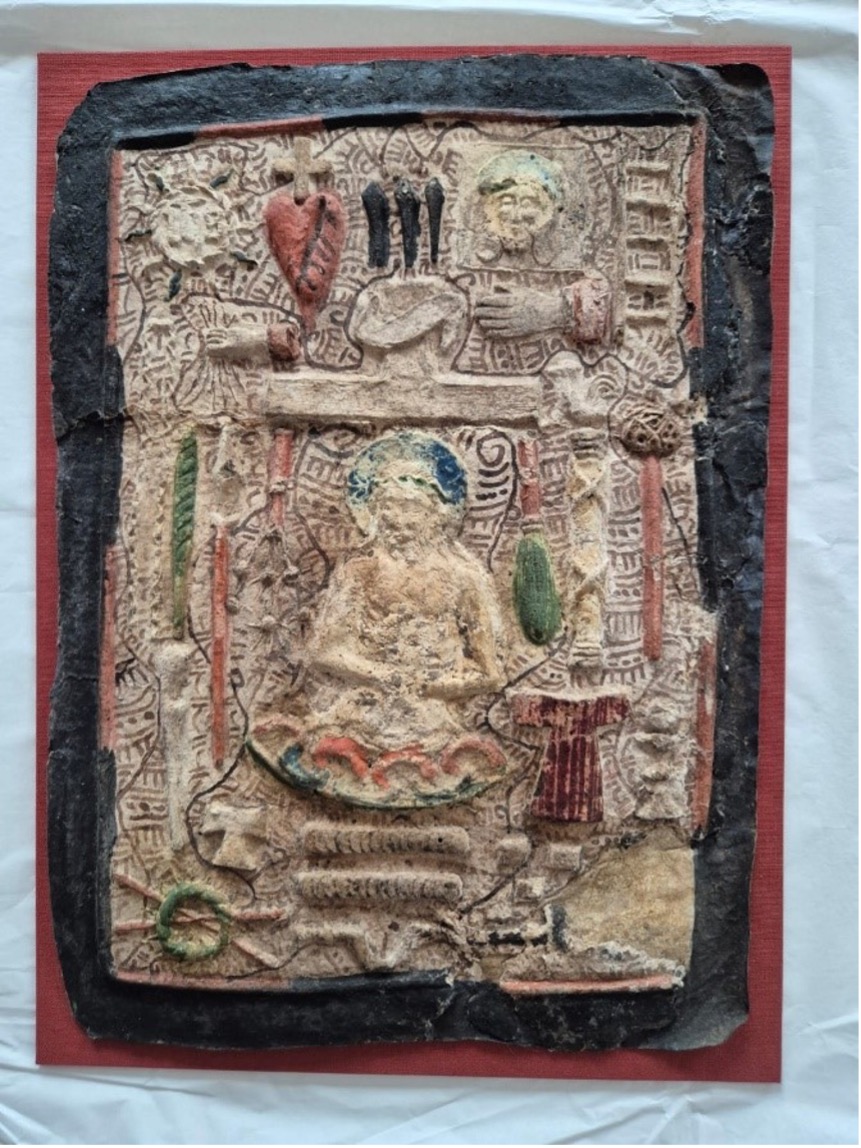
Figure 2: Man of Sorrows with the Instruments of the Passion, paper relief, 28.5 × 20.7 cm, c. 1500 (?), Kloster Wienhausen, WIE Kc 035. © Carolin Gluchowski (with thanks to Kloster Wienhausen for permission to publish).
Media Ensembles beyond Manuscript and Print
This coupling of text and image speaks directly to one of the central concerns of PCPS-CE: the interdependence of media forms in early modern Central Europe. The devotional culture of the Lüneburg convents resists any simple narrative of linear transition from manuscript to print. Handwritten letters, handcrafted paper reliefs, painted miniatures, and printed images coexisted well into the sixteenth century.
Rather than competing, these media reinforced one another. Printed images could circulate alongside handwritten instructions; handmade reliefs could be stored, reused, and reinterpreted in ways similar to printed sheets. What emerges is not a hierarchy of media, but a flexible media ecology in which different forms were mobilised according to function, availability, and devotional need. From this angle, smallness itself becomes an argument. The modest materiality of these objects was not a deficiency but a virtue. Cheap materials enabled wide circulation; fragility encouraged care and repeated engagement; portability made participation possible across enclosure, geography, and social status. These objects functioned as a devotional infrastructure, allowing shared practices to emerge without requiring physical co-presence.
Making Publics without a Public Sphere
Approached through PCPS-CE’s conceptual framework, the devotional exchanges traced in the Lüneburg material invite us to rethink what we mean by publics. They do not align neatly with Habermasian models of a singular, secular public sphere emerging from print capitalism and political debate. Yet they are undeniably collective. These practices created shared horizons of meaning. They synchronised devotional time, structured affect, and bound individuals into networks of prayer, obligation, and memory. Participation was not based on visibility or open debate, but on shared practices of seeing, reading, and praying. Letters and images coordinated behaviour and belief across convents and between cloister and city.
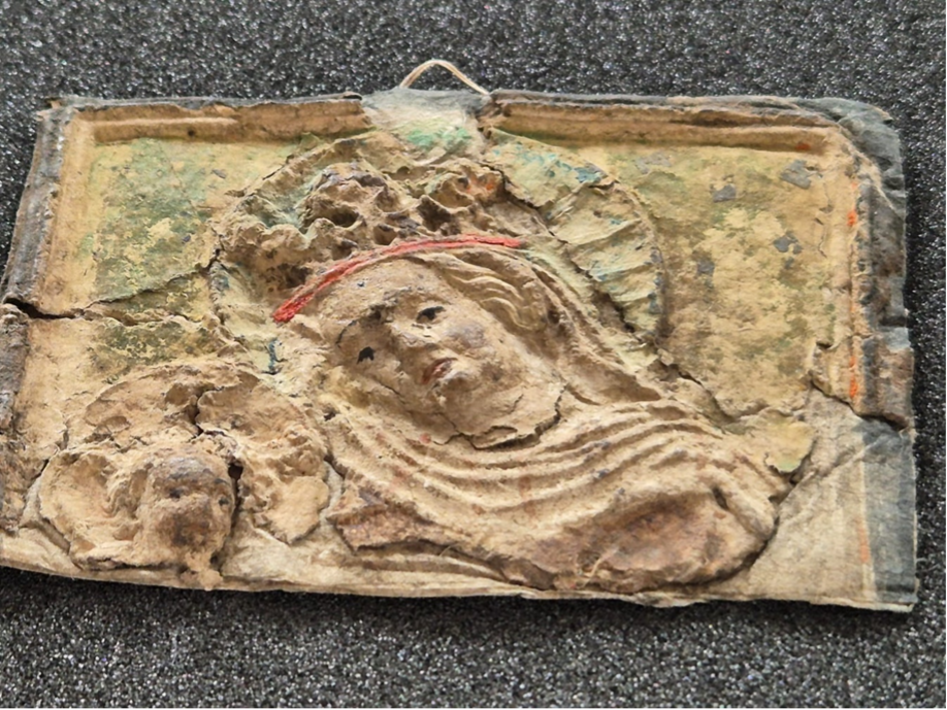
Figure 3: Virgin and Child, paper relief (fragment), mid-15th century (?), 6.7 × 9.3 cm, Kloster Wienhausen, WIE Kc 095. © Carolin Gluchowski (with thanks to Kloster Wienhausen for permission to publish).
Women’s convents thus emerge not as marginal or private spaces, but as active nodes in regional communication networks. They curated devotional practices, shaped the circulation of objects and texts, and extended their influence beyond enclosure through carefully managed exchanges with laywomen and urban elites. In doing so, they contributed to the formation of multiple, overlapping devotional publics—gendered, transregional, and materially grounded.
San Francisco as a Site of Scholarly Circulation
Presenting this material at the RSA in San Francisco foregrounded another level of circulation: that of scholarship itself. The paper formed part of two linked sessions devoted to devotional media and circulation, where manuscripts, prints, images, and objects from different European regions were discussed side by side. Bringing the Lüneburg material into this comparative context highlighted both its specificity and its broader relevance.
The discussions underscored how valuable it is to move between microhistorical case studies and larger methodological questions about media, participation, and publics. In this sense, the RSA panels mirrored the aims of PCPS-CE by creating a space for transregional, interdisciplinary exchange and by challenging inherited narratives about the dominance of print and the timing of public formation.
From Wienhausen to PCPS-CE
If an earlier blog post traced my encounter with the Wienhausen reliefs in situ, this contribution moves decisively beyond the site visit. It asks how such objects functioned within larger systems of communication and how they can help us rethink the history of print culture and public spheres from a gendered and longue durée perspective.
Wienhausen goes to San Francisco is therefore more than a catchy headline. It signals a shift in scale and ambition. The paper reliefs once hidden beneath the choir floor at Wienhausen become evidence for how shared devotional cultures were materially organised and socially sustained in Central Europe on the eve of profound media and confessional change. By tracing their circulation and reading them together with the letters that animated them, we gain a clearer view of how small, humble media enabled collective participation, durable practice, and the making of publics—long before the rise of modern print culture.