




Conference Report
By Carolin Gluchowski
PCPSCE – Print Culture and Public Spheres in Central Europe (1500–1800)
The Sofia conference Agents of Censorship and the Circulation of Printed Material in Central Europe (1500–1800) offered a rich and methodologically ambitious intervention into the history of censorship, print culture, and public communication. Held under the framework of COST Action CA23137, Print Culture and Public Spheres in Central Europe, 1500–1800, the conference addressed one of the field’s central questions: how did censorship operate not only as prohibition, but as a set of practices through which authorities, institutions, printers, authors, readers, performers, and communities shaped the circulation of texts and meanings? The COST Action’s wider project is explicitly concerned with decentring established national and western European narratives of print culture by treating Central Europe as a multilingual, multi-confessional, and legally plural space of overlapping centres and margins.
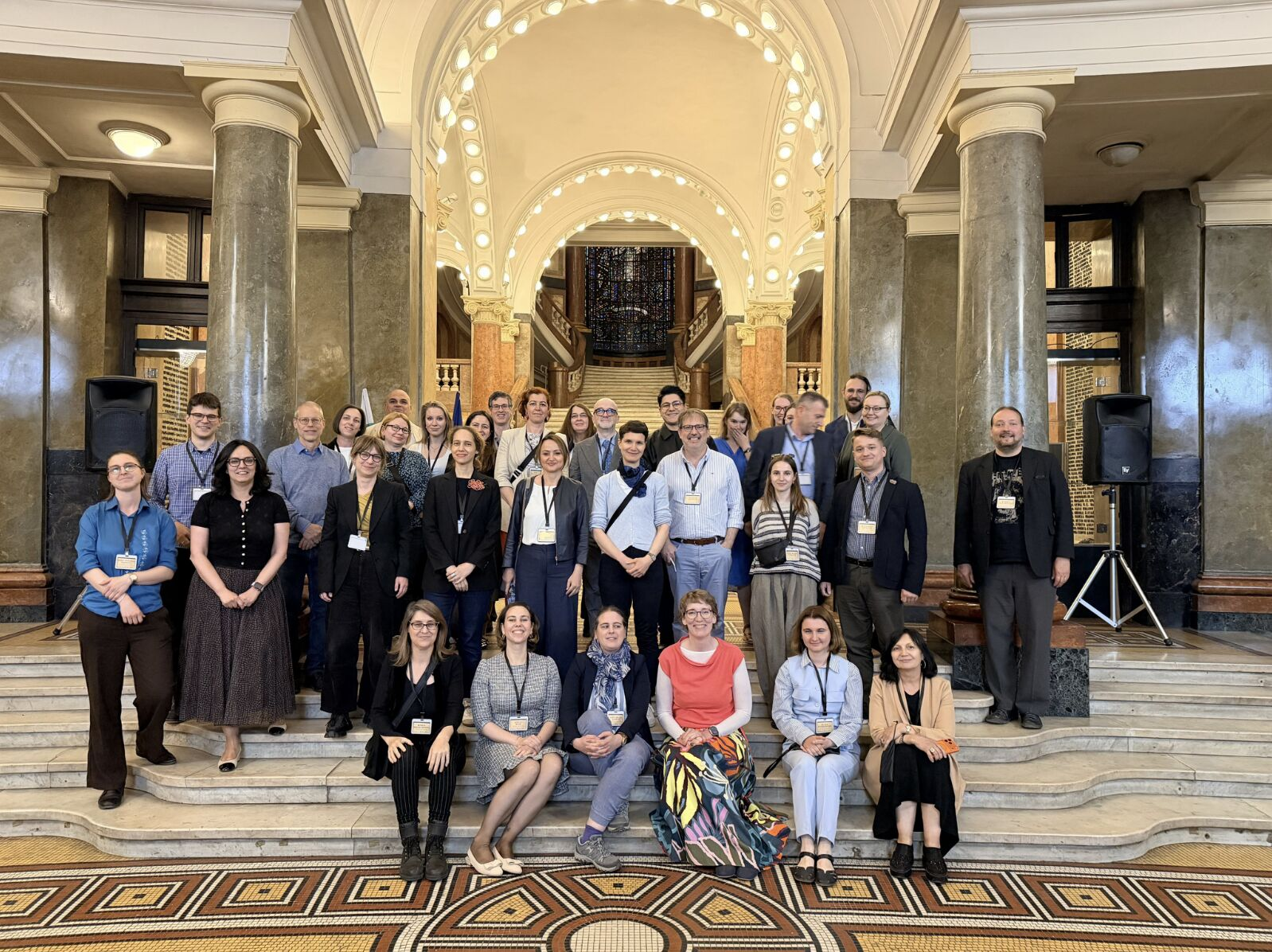
The conference programme made this ambition explicit. Its call and programme framed censorship as a problem of agency, strategy, negotiation, resistance, and circulation rather than as a merely vertical imposition of state or church authority. It asked how censorship varied across territories, institutions, genres, languages, and confessional regimes, and how censorial practices interacted with manuscript, print, theatre, music, newspapers, privileges, visual forms, and public opinion. This orientation aligns closely with a major strand of recent and classic scholarship that treats censorship not simply as prohibition but as a negotiated system of cultural production, involving authors, censors, printers, booksellers, patrons, readers, and institutions of authorization.[i] New work has increasingly shown that censorship should be studied as an ecology of cultural production: it affects occupational choice, market structure, genre hierarchies, anonymity, privileges, and the long-term direction of intellectual life.[ii] Recent quantitative work on Catholic censorship in early modern Italy, for example, argues that censorship reduced knowledge production not only by banning works but by diverting talent toward safer intellectual activity.[iii] Similarly, recent research on Renaissance Venice shows that censorship altered publishing firms’ market shares, survival prospects, and publication strategies, especially in vernacular and non-religious production.[iv]
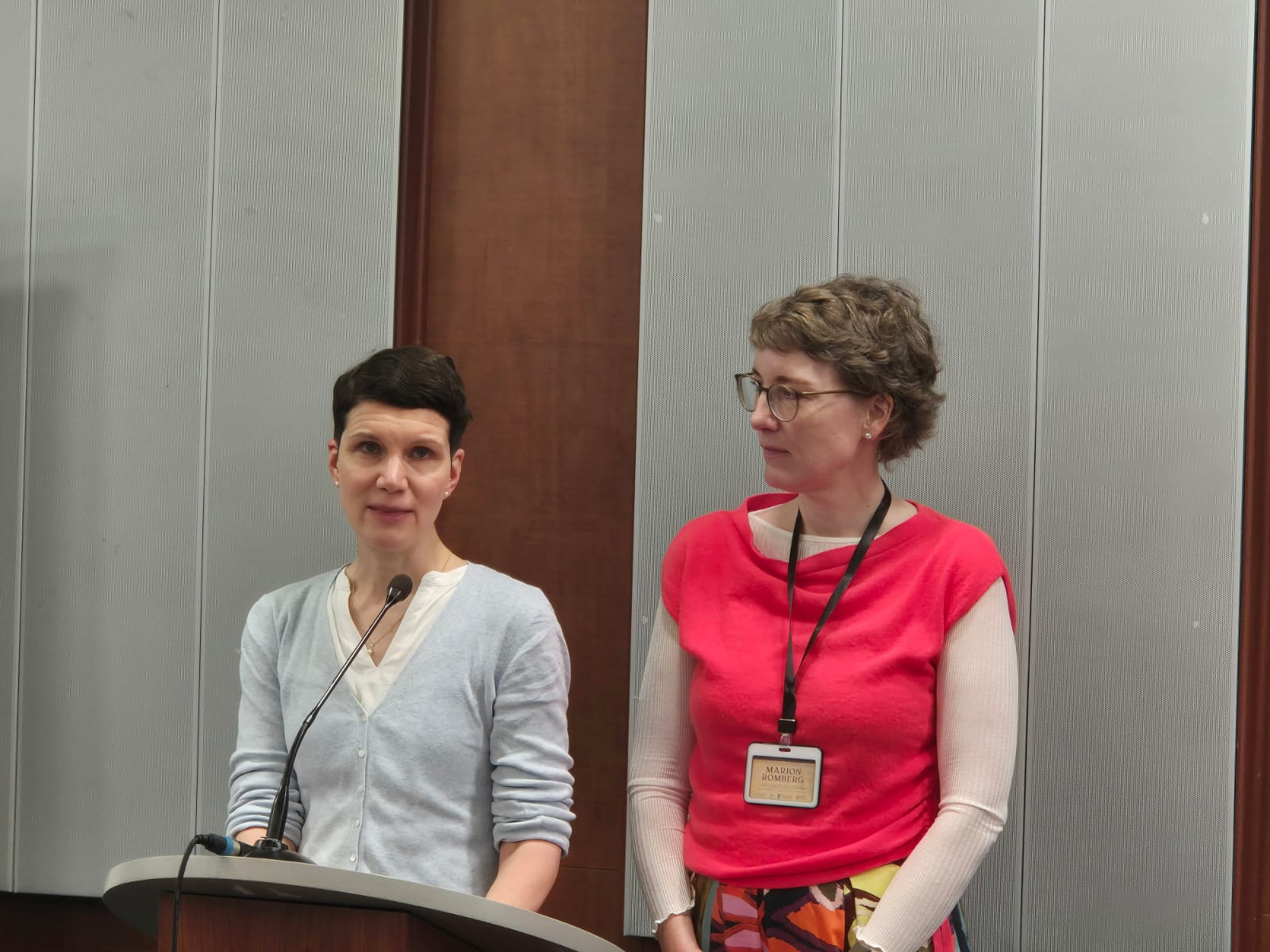
The Sofia papers collectively confirmed and complicated this newer research agenda. They demonstrated that censorship was neither a single institution nor a stable practice. It appeared as preventive governance, confessional boundary-making, paratextual self-framing, script invention, privilege, market control, diplomatic pressure, performance regulation, news compilation, visual suppression, and even communal fear. The strongest common finding was that censorship and circulation were mutually constitutive. Censorship did not simply stop texts from moving; it often determined how, where, in what form, under whose authority, and with what interpretive framing they moved.
Imperial Frameworks and Preventive Governance
Orlin Sabev’s (Bulgarian Academy of Sciences) keynote, “Tolerance, Restrictions, and Censorship: Policies Towards the Circulation of Printed Material in the Ottoman Empire (1500–1800),” provided an essential comparative opening. By placing Ottoman practices alongside Central European and Habsburg cases, the keynote helped to dislodge the persistent assumption that the history of print must be narrated as a universal movement from restriction to freedom. Recent work on Ottoman printing has challenged the old claim that Ottoman sultans straightforwardly “banned” print, arguing instead that the evidence points to more complex combinations of toleration, selectivity, communal production, manuscript continuity, and administrative pragmatism. Within the conference’s larger argument, Sabev’s intervention was therefore foundational: it showed that censorship must be reconstructed from the actual routes, institutions, languages, and communities of circulation, rather than inferred from a presumed European model of print modernity.
Annemieke Romein’s (University of Twente) paper, “Preventive Censorship in Early Modern Policeygesetzgebung: Patterns and Practices in Bern’s Regulatory Framework,” offered one of the clearest demonstrations of censorship as governance. Drawing on Bernese Policeyordnungen and the Max Planck Institute’s Online Repertorium der Policeyordnungen, Romein situated censorship within the early modern logic of Policey: the maintenance of communal order and the prevention of harm. Her material included handwritten transcripts of regulations whose printed originals had often been lost after public display, a reminder that the archive of censorship may survive in administrative copies rather than in printed artefacts themselves. The key finding was that Bernese censorship addressed a wide field of perceived dangers: memories of civil war, sedition, reputational injury, morally objectionable writings, and false rumours. Penalties ranged from fines and imprisonment to the public destruction of offending material. Censorship here was not reducible to ideological repression; it formed part of a preventive regime linking local authorities, printers, and the public in the regulation of social order.
Paolo Astorri’s (University of Copenhagen) “Burning, Expurgating, Permitting: Protestant Regimes of Reading and Censorship in the Seventeenth Century” shifted the focus from municipal regulation to confessional and academic debate. His paper reconstructed Protestant discussions of burning, expurgating, tolerating, and destroying books, showing that Protestant polemicists and jurists developed sophisticated censorial arguments even while criticizing Catholic censorship. The presentation began from Catholic polemics that accused Calvinists and Lutherans of practising forms of censorship analogous to those they condemned in Rome. Protestant responses did not produce a simple defence of free reading. Instead, they developed moral, legal, and theological distinctions between harmful and permissible books, between the danger of error and the obligation to protect the faithful. Astorri’s contribution was important because it undermined a still-common confessional asymmetry in censorship history: Protestant cultures did not merely oppose censorship; they redefined it in their own disciplinary and theological terms.[v]
Self-Censorship, Paratext, Script, and Silence
The session on self-censorship deepened the conference’s treatment of agency by turning from external regulation to authorial anticipation. Anna G. Piotrowska’s (University of Konstanz) “Rhapsody and the Politics of Self-Censorship in the Early Modern Period” argued that early modern authors used the label “rhapsody” as a strategic publishing practice. Especially in the seventeenth and eighteenth centuries, the term allowed authors to present heterogeneous, fragmentary, experimental, or provisional works while managing possible criticism. By invoking the Homeric and improvisational associations of rhapsody, writers could frame textual disorder as learned assemblage rather than formal failure. Piotrowska’s paper is especially valuable when read in light of recent scholarship on anonymity, authorship, and the blurred author-function in eighteenth-century publishing. Lodovica Braida’s recent work on Italian anonymity, for example, emphasises that authorship in the eighteenth-century book world was mediated by printers, translators, patrons, readers, and peers rather than by the named author alone.[vi] Piotrowska’s “rhapsody” operates in a similar zone of mediated authorship. It is not anonymity, but it is a paratextual shield. It tells readers how to judge the work before judgment begins. In this sense, the paper made a broader theoretical point: self-censorship may operate through genre labels, titles, prefaces, and expectations, not only through omissions or silences.
Ardian Muhaj’s (Academy of Sciences of Albania) “Between Script and Silence: Dhaskal Todri and the Censorship of Albanian Liturgical Print Culture in the Late Ottoman Balkans” moved from paratext to script and vernacularization. Through the case of Dhaskal Todri, or Teodor Haxhifilipi, Muhaj examined Albanian biblical and liturgical translation under conditions in which vernacular Orthodox worship was discouraged or suppressed by Ottoman structures and elements of the Greek ecclesiastical hierarchy. Todri’s creation of a 52-letter Albanian alphabet emerged as a strategy for religious and linguistic survival in the absence of accepted printing norms. The paper’s crucial insight was that censorship in the late Ottoman Balkans was not limited to formal decrees. Institutional pressure, ecclesiastical hostility, local violence, rumour, fear, and the later destruction of manuscripts during an epidemic functioned as de facto agents of censorship.
Infrastructures, Markets, and the Effects of Regulation
The session on the impact of censorship examined what regulation did to print cultures once it became embedded in local infrastructures, markets, and confessional competition. Irena Ipšić (University of Dubrovnik) and Minela Fulurija Vučić’s (Independent Researcher) paper, “Censorship Practices in Dubrovnik upon the Establishment of the First Printing House in 1783,” addressed a particularly revealing case because Dubrovnik’s first printing house was founded only in 1783. The late establishment of domestic printing in Dubrovnik means that censorship there cannot be understood as the routine management of a mature local press. It must instead be read against a long culture of manuscript circulation and external printing. Recent work on Dubrovnik manuscript culture confirms that manuscript publication retained unusual importance there even after print had become dominant elsewhere, and that printed books themselves could be copied and circulated by hand. The importance of the Dubrovnik paper lies in its attention to institutional transition. Once printing became locally available, the Ragusan authorities had to regulate not only content but also a new infrastructure of production. Censorship in this context was a response to territorialized print: a press inside the polity created new questions of privilege, responsibility, oversight, and political risk. The paper therefore complements recent scholarship that treats censorship as part of the material and institutional history of book production rather than as a separate ideological layer.[vii]
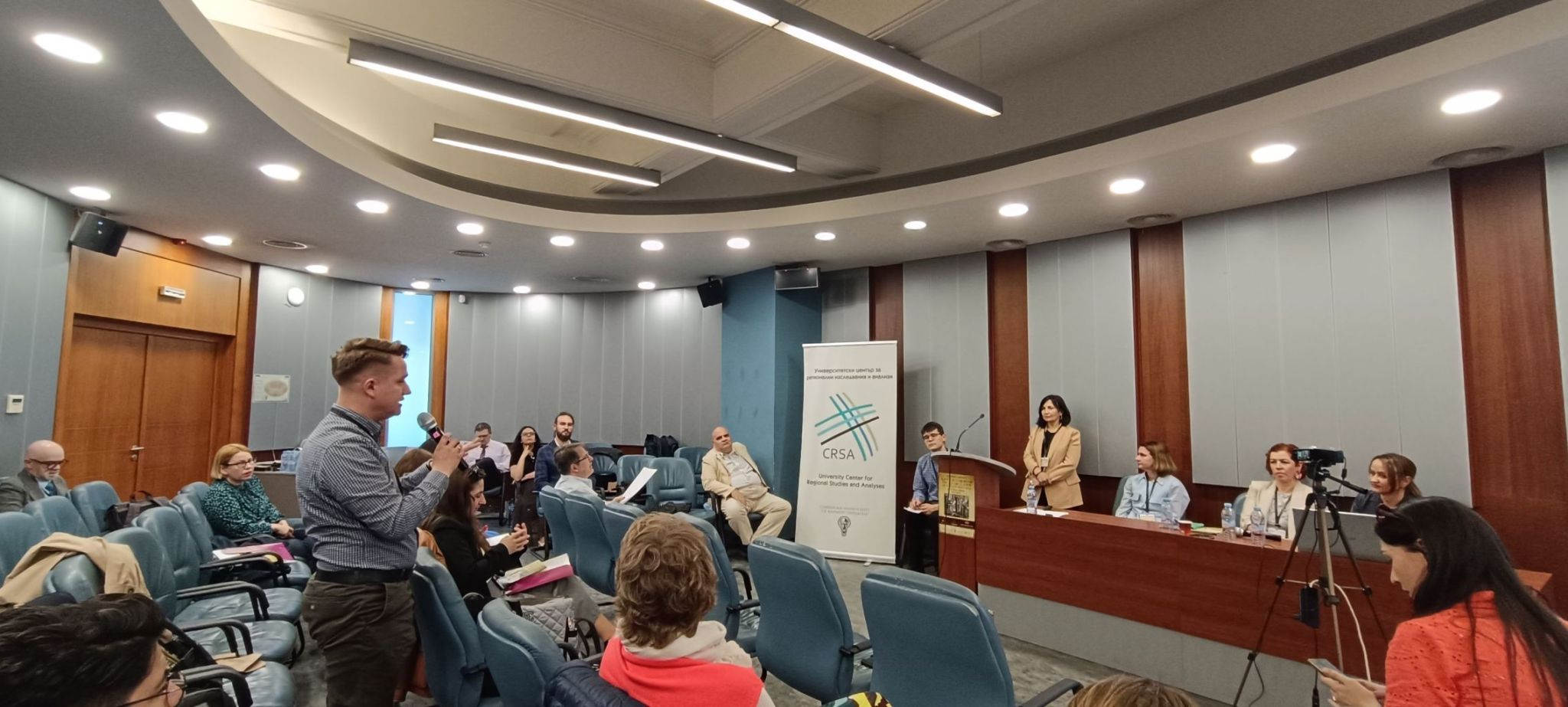
Aleksandar Zhabov’s (Sofia University) “Orthodox Printing in the Balkans and the Religious Encounter between the Counter-Reformation and Eastern Orthodoxy” offered a compelling model of indirect censorship. Zhabov argued that Orthodox printing in the Balkans developed under structurally difficult conditions: Orthodox societies lacked stable Christian state patronage, aristocratic support, and a large literate middle-class market. As a result, Orthodox needs were often met by presses outside the Balkans, especially in Venice and the Polish-Lithuanian Commonwealth. Because much production was small-scale, liturgical, and not directly threatening to Ottoman political order, the Ottoman state often remained relatively passive. The more active censorial pressure came from Catholic institutions, especially Jesuit conflict with Patriarch Cyril Lukaris and Propaganda Fide’s efforts to restrict printing in Wallachia. Zhabov’s most significant finding was the paradoxical productivity of indirect censorship. Catholic efforts to restrict Orthodox printing did not simply suppress production. They helped stimulate vernacular Romanian printing and contributed to the translation of Latin material into Church Slavonic. This finding resonates with the newest research on censorship and innovation, which increasingly asks not only what censorship destroyed but also how cultural producers adapted under pressure.[viii] Zhabov’s case shows why such claims must be made carefully: censorship may redirect production without becoming benign. Its creative effects are often inseparable from coercive asymmetry.
Olena Kurhanova’s “The 1720 Decree and the Decline of Ukrainian Heraldic Poetry: Cause or Coincidence?” treated censorship through the relation between image and text. The 1720 decree reduced the repertoire of Kyiv Metropolis printing houses, especially Kyiv-Pechersk Lavra and Chernihiv, to mainly liturgical publications under strict control. Censors paid close attention to linguistic conformity with Muscovite church books, but heraldic imagery posed a separate problem because coats of arms were absent from Moscow books and were not approved by Moscow censors. Since heraldic poetry typically accompanied such emblems, the disappearance of heraldic imagery after 1720 coincided with the disappearance of heraldic poetry from Kyiv and Chernihiv presses. Kurhanova’s paper stood out for its methodological caution. Rather than treating the decree as an all-purpose explanation, she weighed censorship against other factors: shifts in patronage, changing literary taste, and the transformation of Baroque culture in the Hetmanate. This caution is exemplary. Censorship often coincides with cultural change, but causation must be established through genre history, patronage patterns, material evidence, and production records. The key finding, then, was not simply that censorship ended heraldic poetry, but that visual regulation may have had cascading consequences for poetic form.
Newspapers, Privileges, Public Opinion, and the Problem of Invisible Control
Michael Wögerbauer’s (Czech Academy of Sciences) paper on Cotta’s newspapers and the Habsburg monarchy around 1830 was among the conference’s most theoretically suggestive contributions. Its central provocation was that the case contained “nearly no censors” but “a lot of censorship.” Wögerbauer examined super-regional periodicals, especially the Augsburger Allgemeine Zeitung, which were not printed inside the Habsburg monarchy and therefore could not be subjected to ordinary Austrian pre-publication censorship. Yet because they were widely read and politically influential, they mattered intensely to Vienna. The case centred on anonymous “from Pest” articles concerning the Russo-Ottoman War and on Metternich’s attempts to influence Cotta. Wögerbauer showed that high-level political censorship often bypassed ordinary censorship files. It operated through threats of banning, pressure on publishers, demands concerning anonymity, diplomatic channels, and negotiations with editors. The most subtle point concerned credibility. Austrian officials believed they had to influence the Augsburger Allgemeine Zeitung because readers already assumed it could be manipulated by Austria; yet visible influence made the paper less credible. Censorship therefore became an impossible task: the authorities sought to control public opinion invisibly, while public assumptions about control helped produce the very interventions that damaged credibility. Wögerbauer’s case fits closely with James Brophy’s recent account of Central European publishing between 1800 and 1870, which emphasises that German and Austrian censorship was rigorous but inconsistent, and that publishers exploited both legal gaps and illicit channels as the machinery of censorship struggled under the expanding print market.[ix] The Cotta case shows this dynamic at the highest political level: censorship was not merely an administrative procedure but a struggle over authorship, anonymity, diplomatic legitimacy, and the credibility of public discourse.

Kaarel Vanamölder’s (Tallinn University) “An Attempt to Control Newspaper Reporting: Censorship Practices in Riga and St. Petersburg Newspapers in the 17th and 18th Centuries” shifted the discussion from high politics to the mechanics of news compilation. He reconstructed the postal and communication space linking Hamburg, Riga, and St. Petersburg across the southern and eastern Baltic. Riga’s first newspaper, Rigische Novellen, founded in 1680/81, was intended partly to restrict the circulation of foreign newspapers by creating a monopoly provider of pre-censored foreign news. Later Riga and St. Petersburg newspapers continued to draw systematically on donor papers such as the Hamburger Correspondent. Vanamölder’s methodological contribution was especially important. By comparing donor newspapers with local compilations over annual volumes, historians can identify patterns of borrowing, omission, selection, translation, and adaptation. Censorship becomes visible not only where a text is banned but where a news item is shortened, delayed, displaced, or silently excluded. This paper therefore offered a practical model for studying censorship in serial print, where censorial practice is often dispersed across editorial routine.
Ivona Kollárová’s (Slovak Academy of Sciences) keynote, “Staffing, Transgressions, and Conflicts among Supervisory Officials as the Background of the System of Social Discipline in (Upper) Hungary in the Late 18th Century,” brought the censor as a social actor into view. Based on Hungarian censorship-office sources after Joseph II’s reforms, Kollárová examined appointment, social status, professional expectations, offences, conflicts, and the adaptation of local censors to their positions. Her paper challenged the stereotype of the censor as an anonymous, obedient bureaucratic functionary. Some censors struggled with regulations and superiors; some produced texts resembling pamphlets; some were attracted to the publishing practices they were supposed to police. The key finding was that censorship offices themselves required discipline. The censor was not simply the agent of social regulation; he could also become its problem. Kollárová’s paper thus gave institutional depth to the conference’s recurring theme of distributed agency. Censorship is enacted by people with careers, ambitions, conflicts, literary habits, and social vulnerabilities.
Performance, Opera, Historiography, and Material Theology
The music and censorship session showed that the regulation of print cannot be separated from performance and public sociability.
Vassilis Vavoulis’ (Athenaeum Conservatoire) “Negotiating the Sacred: Censorship Practices and Operatic Speech in Seventeenth-Century Venice” analysed the dual system of State and Church censorship in La Serenissima. Venice’s commercial opera, beginning in 1637, rapidly became an international seasonal phenomenon, with multiple opera houses and numerous new works. State authorities worried about political messages and the treatment of rulers, heroes, gods, and historical figures; Church authorities worried about morality and Catholic orthodoxy. Yet the economic and diplomatic importance of opera made blunt suppression undesirable. Vavoulis’ central finding concerned the censorial function of disclaimers. Librettos routinely framed terms such as “Fato,” “Destino,” and “Paradiso” as poetic licence, thereby distancing authors, printers, and theatre producers from doctrinally problematic meanings. These disclaimers did not eliminate ambiguity; they governed it. The paper showed how paratextual negotiation enabled a commercially vital art form to flourish within a flexible but real censorial regime.
Lorenzo Santoro’s (Hannah Arendt Institute for Totalitarianism Studies e. V.) “Censorship and Cultural Policy on Opera in the Writings of Joseph von Sonnenfels” carried the question of performance into the Habsburg Enlightenment. Sonnenfels was presented as a jurist, official, and cultural thinker whose reflections on theatre, opera, language, and public performance linked censorship to state pedagogy. His writings on the Viennese stage treated theatre and opera as public spaces through which the empire could guide acculturation, linguistic norms, taste, and sociability. Santoro’s contribution was to show that censorship could be constructive as well as prohibitive. In Sonnenfels’ thought, the stage was not merely to be protected from error; it was to be organized as a tool of political education. This expanded the conference’s central narrative: censorship may authorize, discipline, and shape cultural forms in the name of improvement, not only suppress them in the name of orthodoxy.
Anna-Marie Pípalová’s (Charles University) “Censorship, Print, and Circulation in Seventeenth-Century Bohemia: Censoring Bohuslav Balbín’s Epitome in Context” returned to historical scholarship as a politically sensitive genre. Balbín’s Epitome historica rerum Bohemicarum underwent an eight-year censorship process in the 1660s and 1670s, reportedly involving at least twenty-eight censors and extending to Vienna, Rome, and Balbín’s correspondence network. Pípalová argued that the censorship was linked to the Bohemian ecclesiastical tax controversy and to the circulation of anonymous print and manuscript letters critical of clerical taxation. The paper’s major finding was that historiography became censorially sensitive not only when it made overt political claims, but when it overlapped thematically with current institutional conflicts. Balbín’s case also demonstrated the inadequacy of separating manuscript from print. Political criticism circulated across both media, and censorship responded to their interaction. This case therefore sharpened one of the conference’s strongest methodological lessons: censorial archives must be read alongside correspondence, manuscript circulation, anonymous pamphlets, and local political disputes.
Anisia Iacob’s (University of Kent) “Negotiating the Trinity: Anti-Trinitarianism between Banishment and Self-Censorship in late 16th century Transylvania” closed the programme by returning to the boundary between coercion and tactical restraint. The programme identifies the paper as a case study in anti-Trinitarianism, banishment, and self-censorship. Iacob’s broader current research examines how Reformation and anti-Trinitarian ideas were translated visually and materially in church interiors, especially through flora, fauna, and decorative programmes. Within the conference narrative, this paper is best understood as extending censorship beyond printed words alone. Anti-Trinitarian communication in late sixteenth-century Transylvania involved not only doctrinal articulation and punishment, but also silence, displacement, visual coding, and material ambiguity. The case showed that when explicit theological statement becomes dangerous, ideas may survive through objects, interiors, images, and controlled opacity.
Archives, Images, and Urban Memory: Extending the Conference into Sofia
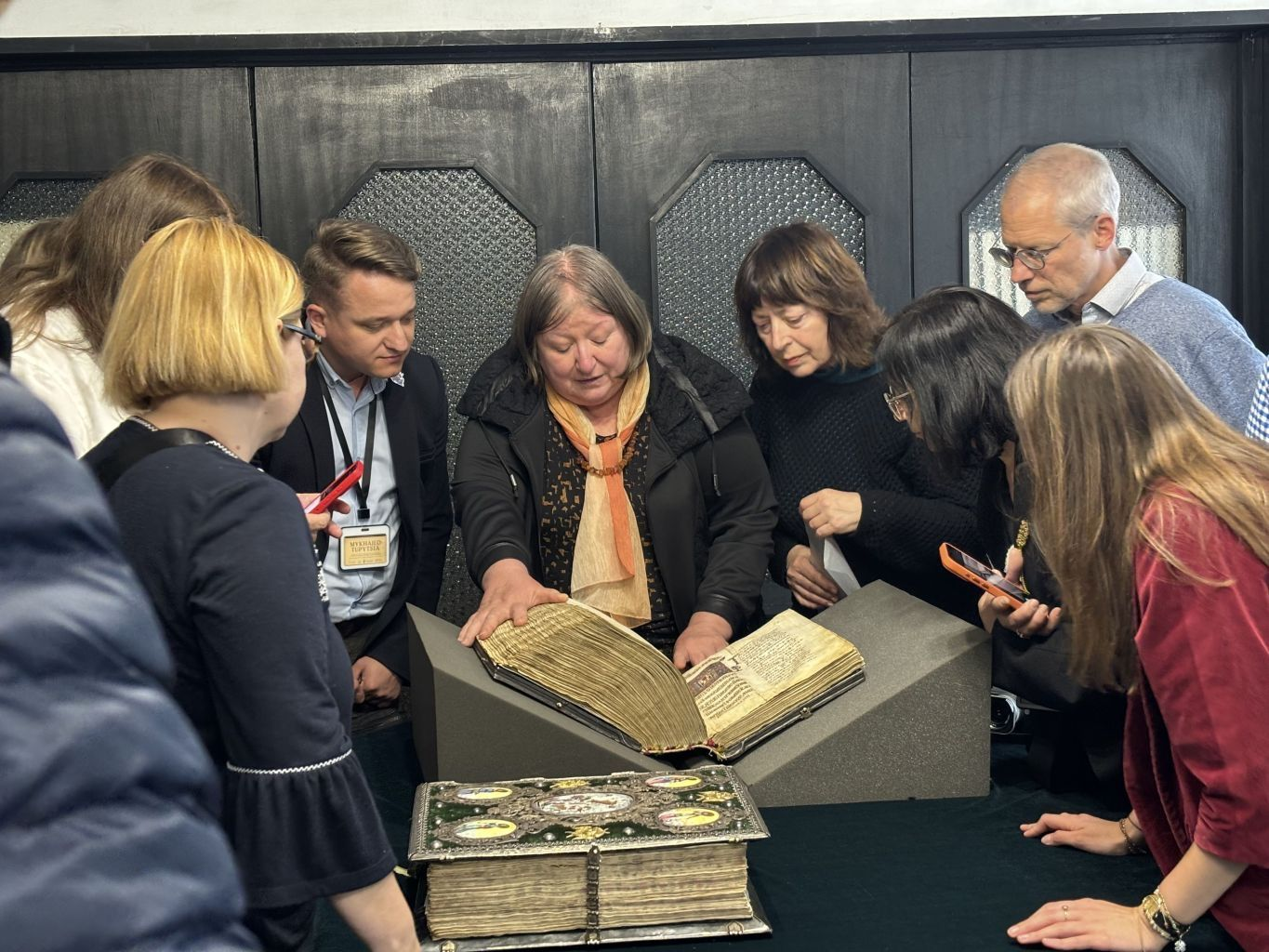
The intellectual work of the conference was extended by three excursions, each of which translated the meeting’s themes into Sofia’s archival, bibliographical, and monumental landscape. Participants could visit the Centre for Slavo-Byzantine Studies together with Boyana Church; the St Cyril and Methodius National Library followed by a Sofia city walk; or the University Library followed by a city walk. These excursions were not ancillary to the conference theme but formed a material and spatial counterpart to it. The visit to the Duychev Centre organised by Prof. Ivan Duychev foregrounded the manuscript, scholarly, and archival infrastructures through which Slavo-Byzantine and Orthodox textual traditions have been preserved, catalogued, and made available for research. Boyana Church, with its medieval fresco programme, connected the discussion of print and censorship to the visual and devotional cultures that shaped religious communication before and alongside print. The National Library and University Library visits, meanwhile, placed the conference’s concerns with circulation, preservation, regulation, and access within living institutions of cultural memory. The Sofia city walks added an urban dimension to these questions, situating libraries, churches, universities, and collections within the layered historical space of the city itself. Together, the excursions reinforced one of the conference’s larger arguments: the history of censorship and print culture cannot be reconstructed from texts alone, but must also be read through collections, buildings, images, catalogues, routes, and the institutions that mediate access to the past.
Common Findings and Scholarly Contribution
The conference’s central contribution lies in its reconceptualization of censorship as a distributed system of mediation. Its papers did not deny repression. Books were burned, texts were prohibited, authors were threatened, censors intervened, and institutions narrowed what could be said. Yet the conference showed that repression is only one part of the story. Censorship also created incentives, produced genres, shaped paratexts, altered scripts, redirected production, disciplined markets, defined privileges, transformed news, and regulated performance.
Several cross-cutting findings stand out.
First, the agent of censorship was rarely singular. The censor could be a council, consistorial authority, imperial court, ecclesiastical hierarchy, printer, publisher, correspondent, reader, theatre producer, translator, diplomat, local community, or even a genre convention. This confirms the conference’s founding premise that censorship must be studied through agency rather than merely through institutions.
Second, censorship was inseparable from circulation. The papers repeatedly showed that authorities were concerned less with texts as static objects than with movement: across borders, languages, confessions, markets, postal routes, theatres, and reading publics. The object of control was not only content but trajectory.
Third, censorship was deeply material. It operated through alphabets, coats of arms, librettos, privileges, newspapers, pamphlets, manuscripts, public notices, and musical-theatrical programmes. Kurhanova’s heraldic poetry, Vavoulis’ operatic disclaimers, Muhaj’s alphabet, Vanamölder’s donor newspapers, and Piotrowska’s “rhapsody” all show that material and formal features could bear censorial meaning.
Fourth, censorship often produced unintended effects. Zhabov showed that indirect Catholic pressure stimulated vernacular Romanian and Church Slavonic production; Wögerbauer showed that invisible control could damage credibility; Kurhanova showed that visual regulation could reshape poetic genres; Romein showed that preventive governance generated an archive of public order. These findings harmonize with recent research that treats censorship not only as a constraint on expression but as a force that reorganizes cultural fields.
Finally, the conference demonstrated the methodological necessity of reading beyond formal censorship files. Some of the most important evidence appeared in transcripts of public regulations, privileges, anonymous correspondence, manuscript letters, paratexts, comparative newspaper corpora, operatic disclaimers, and personnel conflicts within censorship offices. The archive of censorship is therefore not one archive but a constellation of traces.
The Sofia conference thus made a substantial contribution to the study of print and censorship in Central Europe and its neighbouring regions. It advanced a model in which censorship is not merely the opposite of circulation but one of circulation’s structuring conditions. To study censorship well, the papers suggested, is to study the thresholds through which texts passed: legal, confessional, linguistic, material, commercial, performative, and interpretive.
[i] Robert Darnton, Censors at Work: How States Shaped Literature (New York: W. W. Norton, 2014); Annabel Patterson, Censorship and Interpretation: The Conditions of Writing and Reading in Early Modern England (Madison: University of Wisconsin Press, 1984); Richard Burt, Licensed by Authority: Ben Jonson and the Discourses of Censorship (Ithaca: Cornell University Press, 1993). Darnton is especially useful for conceptualizing censorship as a process involving negotiation among authors, censors, booksellers, and institutions of privilege.
[ii] On manuscript and print as interconnected systems, see Harold Love, Scribal Publication in Seventeenth-Century England (Oxford: Clarendon Press, 1993); on early modern print markets, see Andrew Pettegree, The Book in the Renaissance (New Haven: Yale University Press, 2010). On privilege and regulation, see Angela Nuovo, “Book Privileges in the Early Modern Age: From Trade Protection and Promotion to Content Regulation,” in Printing R-Evolution and Society 1450–1500, ed. Cristina Dondi (Cham: Springer, 2023), 35–56. On anonymity and cautious publishing, see Lodovica Braida, Anonymity in Eighteenth-Century Italian Publishing: The Absent Author (Cham: Palgrave Macmillan, 2022).
[iii] Fabio Blasutto and David de la Croix, “Catholic Censorship and the Demise of Knowledge Production in Early Modern Italy,” The Economic Journal 133, no. 656 (2023): 2899–2924.
[iv] Stefano Comino, Alberto Galasso, and Clara Graziano, “Censorship, Industry Structure, and Creativity: Evidence from the Catholic Inquisition in Renaissance Venice,” Journal of Law, Economics, and Organization 41, no. 3 (2025): 1045–1074.
[v] On Protestant censorship, civic order, and the regulation of religious communication in Reformation Germany, see Allyson F. Creasman, Censorship and Civic Order in Reformation Germany, 1517–1648: “Printed Poison & Evil Talk” (Farnham: Ashgate, 2012). For the broader confessional context in which literature, print, discipline, and religious identity formation interacted, see Ute Lotz-Heumann and Matthias Pohlig, “Confessionalization and Literature in the Empire, 1555–1700,” Central European History 40, no. 1 (2007): 35–61.
[vi] Lodovica Braida, Anonymity in Eighteenth-Century Italian Publishing: The Absent Author (Cham: Palgrave Macmillan, 2022). For the broader problem of authorship as a historically mediated function rather than a simple biographical fact, see Roger Chartier, The Order of Books: Readers, Authors, and Libraries in Europe between the Fourteenth and Eighteenth Centuries, trans. Lydia G. Cochrane (Stanford: Stanford University Press, 1994).
[vii] On censorship as embedded in the institutional, commercial, and material processes of book production, see Robert Darnton, Censors at Work: How States Shaped Literature (New York: W. W. Norton, 2014); Andrew Pettegree, The Book in the Renaissance (New Haven: Yale University Press, 2010); Angela Nuovo, “Book Privileges in the Early Modern Age: From Trade Protection and Promotion to Content Regulation,” in Printing R-Evolution and Society 1450–1500, ed. Cristina Dondi (Cham: Springer, 2023), 35–56.
[viii] For censorship as a force that reshapes intellectual labour, publishing strategies, and market structure rather than merely suppressing individual works, see Robert Darnton, Censors at Work: How States Shaped Literature (New York: W. W. Norton, 2014); Fabio Blasutto and David de la Croix, “Catholic Censorship and the Demise of Knowledge Production in Early Modern Italy,” The Economic Journal 133, no. 656 (2023): 2899–2924; Stefano Comino, Alberto Galasso, and Clara Graziano, “Censorship, Industry Structure, and Creativity: Evidence from the Catholic Inquisition in Renaissance Venice,” Journal of Law, Economics, and Organization 41, no. 3 (2025): 1045–1074.
[ix] James M. Brophy, Print Markets and Political Dissent: Publishers in Central Europe, 1800–1870 (Oxford: Oxford University Press, 2024). Brophy’s study is particularly useful here because it treats publishers not simply as commercial intermediaries but as active brokers of Central Europe’s political public sphere under the restrictive conditions created by the Carlsbad Decrees, police surveillance, prosecution, and shifting press regulation.