



We welcome applications from researchers and other participants who are interested in working with bibliographical and related historical datasets and in exploring research ques-tions that can be approached through digital methods.
Important dates
Deadline for applications: October 15, 2026
Successful applicants will be contacted by end of October, 2026
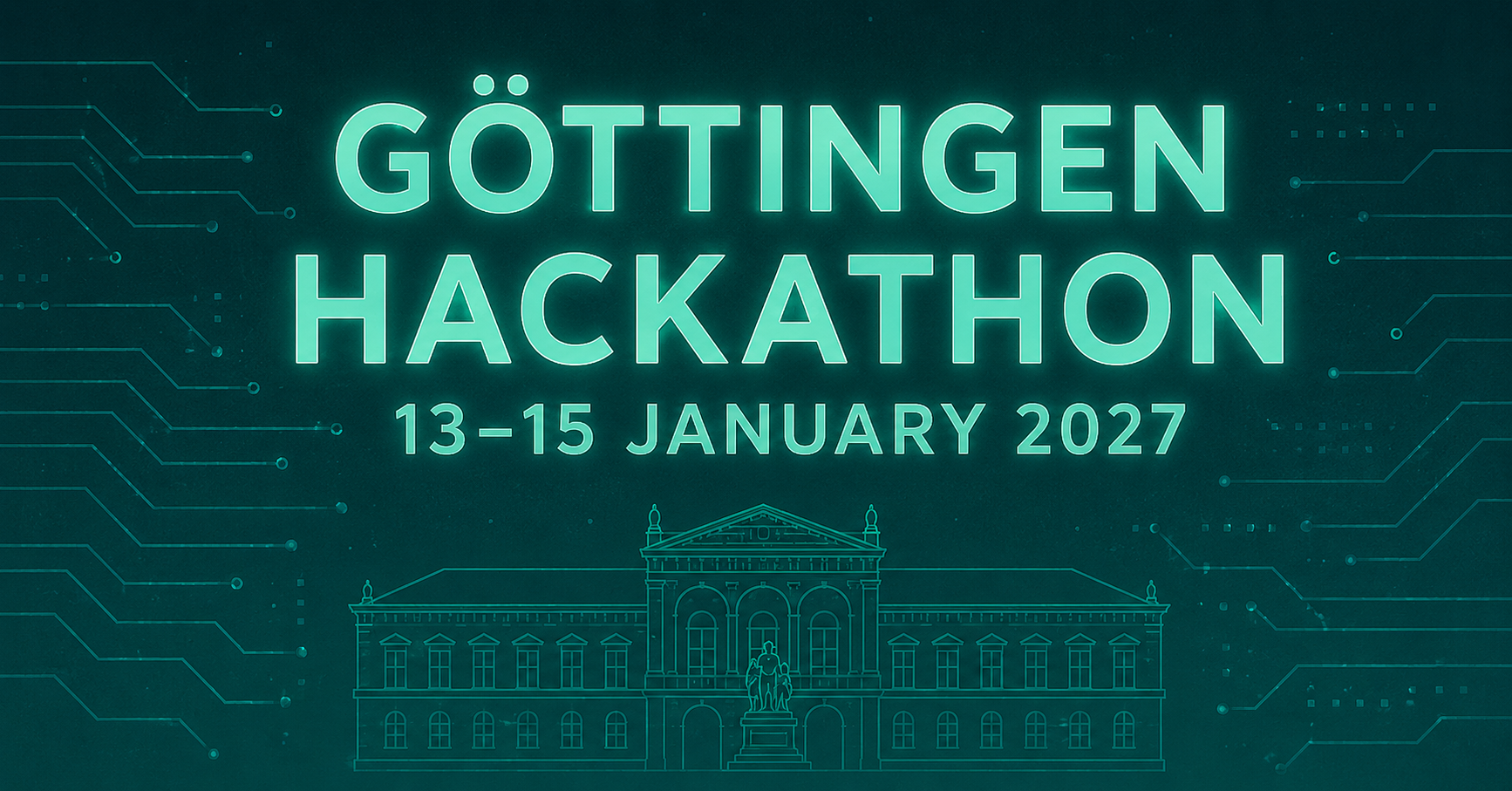
Dates of the Hackathon: 13–15 January 2027
About this Action
PCPSCE investigates interactions between the early modern media revolution, sparked by the rise of printing, and the emergence of public spheres in Central Europe. The Action aims to build a European and global network of stakeholders from education, research and cultural institutions with a special focus on Young Researchers and Innovators. It works towards an integrative methodology that brings together experts from different national and disciplinary backgrounds. The Action includes work on joint publications such as a compendium on the book history of Central Europe and the development of an annotated catalogue of digital data and tools. The initiative aims to promote a new scholarly and public historical awareness of the diverse, non-national pasts of Central Europe. More information can be found in the Action’s Memorandum of Understanding (MoU) available in the following web page: www.pcps-ce.eu.
About the Hackathon
How can digital methods help us address key research questions concerning print culture and public spheres in Central Europe?
The three-day PCPSCE Hackathon in Göttingen will bring together researchers with different disciplinary and technical backgrounds to explore this question collaboratively. It is the second in a series of three organized by the Action’s digital humanities working group. At the centre of the hackathon will be an initial dataset of bibliographical data prepared and continuously enhanced within the Action. Participants will work together to refine, enrich, analyse, and experiment with this dataset while exploring different digital approaches to the research questions of PCPSCE. A central aim of the hackathon is to contribute to selected chapters of the Action’s Compendium “Print Culture Public Spheres in Central Europe (1450–1800)”, which is currently being prepared by a number of contributor teams. While many of these chapters are already well advanced, the hackathon will explore how digital methods and analyses can complement and enrich their arguments, perspectives, and findings.
- We envisage approximately six working groups, each supported by a group leader or trainer with expertise in the respective area. Possible areas of work include:Data refinement and enrichment: improving, harmonising, linking, and extending the existing bibliographical dataset;
- Network analysis: exploring relationships between authors, printers, publishers, places, works, and other entities;
- Mapping and spatial analysis: investigating the geographical dimensions of early modern print culture;
- Quantitative analysis and visualisation: identifying patterns and trends within the bibliographical data;
- Computer vision: exploring possibilities for working with visual and digitised material;
- Text mining: experimenting with computational approaches to textual sources and associated metadata.
The precise questions and approaches will be developed within the groups. Participants are encouraged to contribute their own research questions and perspectives and to consider how these might be investigated using the available data and digital methods.
The hackathon is intended as an exploratory and collaborative environment: previous programming experience is not required, and beginners are explicitly welcome.
About the Dataset
At the heart of the hackathon is a bibliographical dataset that is currently being developed within the PCPSCE Action. It brings together a wide range of bibliographical data from different national and regional resources across Central Europe, with the aim of making these heterogeneous sources accessible for joint analysis, e.g. by attempting to map various catalogue data to the central database for the sake of reliably identifying bibliographic items.
The long-term goal is to create a comprehensive research resource that will enable Action members to investigate specific questions relating to print culture and public spheres in Central Europe in a systematic and comparative way. By bringing together bibliographical information across present-day national and linguistic boundaries, the dataset will facilitate the exploration of broader patterns, connections, and developments that are difficult to identify when working with individual bibliographical resources in isolation.
The dataset is currently being prepared as part of an STSM and is therefore still under development. The hackathon will therefore provide an opportunity not only to work with and analyse the existing data, but also to critically assess, refine, and enrich the dataset itself.
How the Hackathon Will Work
The first day will begin with an introduction to the existing dataset, its structure, scope, and possibilities. Participants will then join their working groups, where they will refine their research questions together with the group leader and discuss suitable methods and approaches. Based on participants’ interests, skills, and of the thematic requirements of the compendium, each group will develop a work plan and distribute tasks before beginning its practical work.
The second day will be dedicated primarily to collaborative work within the groups. Participants will analyse and enrich the data, experiment with methods, and develop outputs such as visualisations, quantitative analyses, maps, networks, or other digital approaches. Groups will have an opportunity to share preliminary findings and discuss challenges and possible next steps.
On the third day, groups will conclude their work and prepare their results for presentation. The hackathon will end with a joint session in which the groups present and discuss their findings, methodological insights, and ideas for possible further development.
The emphasis is not necessarily on generating a finished product within three days. Rather, the hackathon aims to create a space for experimentation, interdisciplinary exchange, contributing to existing datasets, and the development of new research questions and methodological approaches. Parts of the hackathon’s results might be incorporated in the Action’s Compendium “Print Culture Public Spheres in Central Europe (1450–1800)”.
Who should apply?
We welcome applications from researchers and other participants who are interested in working with bibliographical and related historical datasets and in exploring research questions that can be approached through digital methods. We particularly encourage applications from participants who:
- are already Compendium authors and would like to complement or extend their research through a digital component;
- work on topics related to print culture, book history, public spheres, preferably with a particular emphasis on Central Europe;
- have research questions that could potentially be explored using large bibliographical datasets;
- are interested in learning about or experimenting with digital research methods;
- would like to contribute disciplinary, historical, methodological, or technical expertise to collaborative group work.
- No previous experience with programming or digital methods is required. We welcome both beginners and participants with advanced technical skills.
How to apply?
Please submit a one-page proposal outlining:
- your motivation for participating in the hackathon;
- the research questions or topics you would be interested in exploring;
- how your interests relate to the aims and research questions of COST Action PCPSCE;
- if applicable, which of the proposed working areas or groups you would be particularly interested in joining;
- any relevant experience or expertise you would bring to the group.
Finally, please briefly indicate your level of familiarity with data handling, digital research tools, and/or programming languages. This information will help us compose balanced working groups and is not a selection criterion based on technical expertise. Beginners are very welcome.
Please send your proposal no later than October 15 to Péter Kiràly (peter.kiraly@gwdg.de).
Selection and Notification
Applications will be reviewed with a view to creating a diverse group of participants representing different research interests, disciplinary backgrounds, career stages, and levels of technical experience.
Applicants will be informed of the outcome by the end of October 2026.
Participation costs for selected participants will be covered in accordance with COST rules. For more information on the COST Action PCPSCE, visit our website https://pcps-ce.eu/.
Acknowledgement
COST Action CA23137 PCPSCE is funded by COST (European Cooperation in Science and Technology). COST (European Cooperation in Science and Technology) is a funding agency for research and innovation networks. Our Actions help connect research initiatives across Europe and enable scientists to grow their ideas by sharing them with their peers. This boosts their research, career and innovation. www.cost.eu.