YRI Summer School “Print Culture and Translation in Central Europe (1500–1700): Methods, Problems and Approaches” (Tallinn in July 2026) – PROGRAM ONLINE
PROGRAM
Day 1
30 June, Tuesday
Arrival
15.00-15.30 – Registration: Under and Tuglas Literary Institute of the Estonian Academy of Sciences, Kohtu 6/1, 1st floor
15:30-15:45 – Welcome address: Kristi Viiding, Director of UTL Tallinn
Ivan Almes, Department of History, Ukrainian Catholic University, WG5 Co-leader
15:45-17:00 – Training Session 1: Translation and Reception in Early Modern European Intellectual History(László Kontler, CEU)
This lecture will provide an overview of inter-lingual translation as a vehicle for the circulation and transmission of ideas in Europe between c. 1500-1800. It will discuss the motivations, intentions and stakes of translating texts, both from classical languages into modern vernaculars and between the latter. It will assess the opportunities and the limitations of communicating ideas across linguistic and cultural borders via translation, the chief theories and methods of translation advanced by early modern scholars, and the major transformations of the “translation industry” in response to changes in the character and composition of the readership and the book market.
17:00-17:30 – Coffee/tea break
17:30-18:45 – Participants panel 1: Historiography and Communication (moderator: Ivan Almes)
*Juliana Hudecová. Welmi piekna nowa Kronika 1519: stylistic differences of the Czech and German edition (1499 and 1500)
*Anna-Marie Pípalová. Czech, German, and Latin in Seventeenth-Century Bohemian Historiography
*Mark Alexander Ummelas. The image of Russians in the early modern German-speaking cultural space
*Anders Dyrborg Birkemose. The Newspaper Medium (Intelligence papers) in a Danish Media Historiography
19.30 – Pay-as-you-go dinner: Museum Garden of the Under and Tuglas Literary Institute, Väikese Illimari 12, Tallinn (optional, and please note: participants who wish to join this dinner will cover a small part of its cost from their daily allowance)
Day 2
1 July, Wednesday
09:30-10:45 – Training Session 2: Useful concepts and approaches in translation history from the perspective of early modernists (Veronika Čapská, Faculty of Humanities, Charles University / Institute of Philosophy, Czech Academy of Sciences)
This presentation will be methodologically oriented. We will explore a variety of concepts and approaches used by translation historians, such as the “turn to translators” and to the agents of translation (Lawrence Venuti), the concept of translation flows (Manuel Castells), translation in relation to the concept of the public sphere (Massimo Rospocher) and the materiality of translation texts (Marie-Alice Belle and Brenda Hosington), including the typographic mediation of translation. We will conclude by discussing the arising research questions related to early modern Central Europe that deserve further attention.
10:45-11:15 – Coffee/tea break
11:15-12:55 – Participants panel 2: Prints, Ideas, Genres (moderator: Kristi Viiding)
*Helena Žáčková. Bohemian Printing Production from the 16th to 18th Centuries by Women Printers in the Czech lands
*Anisia Iacob. Anti-Trinitarian Ideas on the Move: De Falsa et Vera and the Spread of Servetianism in 16th-17th-Century Central-Eastern Europe
*Orsola Lorena Purcaro. Learning Languages, Teaching Morals: Aesop’s Fables in Early Modern Bilingual Editions
*Michał Heintze. Publishing and Editorial Issues in Lyricorum libri by Maciej Kazimierz Sarbiewski SI (1595–1640)
*Madli Vanamölder. Printed Jubilee Reports and the Circulation of Academic Rituals: Ceremonial Print Culture in Early Modern Europe
12:55-14:45 – Lunch
(please note: participants will cover the cost of the meal from their daily allowance)
14:45-16:00 – Training Session 3: Problems of translation in the Bohemian literature of the 16th and 17th centuries(Marta Vaculinová, Centre for Classical Studies, Institute of Philosophy of the Czech Academy of Sciences)
The aim of the presentation is to examine the fundamental issues involved in the study of early modern translation literature, drawing on examples from the Bohemian lands, and to characterize: (1) the languages involved in the translation process; (2) the genres and themes of the translated works; (3) the influence of political circumstances and religious affiliation on the selection of texts for translation; (4) the role of translators in the publication process; and (5) the role of dedication recipients in translations and their influence on the choice of texts to be translated.
16:00-16:30 – Coffee/tea break
16:30-17.45 – Training Session 4: Book history and bibliographic data analysis (Peeter Tinits, Max Planck Institute for Evolutionary Anthropology in Leipzig/ University of Tartu)
New approaches are being developed in book history that apply digital humanities methods to historical bibliographic data. This often entails various processing steps to harmonize the data that originates from a variety of sources. In the training session we will explore bibliographic data with general purpose and specialized tools. We will then discuss problems and opportunities that large-scale analysis of bibliographic data offer for studies in book history.
18:10 – 19.00 – Optional tour in the Banned Books Museum (Munga 2)
Optional Dinner in the restaurant Olde Hansa (Vana Turg 1)
(Please note: participants will cover the cost of the meal from their daily allowance)
Day 3
2 July, Thursday
09:30-10:45 – Training Session 5: From Page to Parallel Text: A Beginner’s Pipeline for the Digital Study of Early Modern Translation (Annemieke Romein, University of Twente)
This session introduces, for those entirely new to the digital humanities, the sequence of steps that turns a digitised early modern book into evidence for translation research. Beginning with handwritten and printed text recognition in Transkribus, it shows how a page becomes machine-readable data — and why that data is never simply “the text.” The aim is orientation rather than mastery: participants leave with a clear map of the pipeline, a sense of what each tool does, and the references needed to go further on their own.
10:45-11:45 – Participants panel 3: Digital and Visual (moderator: Kaarel Vanamölder)
*Ada Migliazza and Antonia Foggia. A Digital Platform for Neo-Latin Studies: Research Perspectives, Challenges and Opportunities
*Killu Raja. “The Hieroglyphics of Horapollo”: publications and references in 1500–1700″
*Małgorzata Wojtkowiak. Visualizing the Word: From Hermetic Translation to Medici Power Iconography (and its echoes in Central Europe)
11:45-12:15 – Coffee/tea break
12:15-13:30 – Training Session 6: Using AntConc for Historical Research (Anastasia Tenchurina)
AntConc is a corpus analysis tool widely used in linguistics and digital humanities research for studying textual patterns and discourse. The workshop will introduce participants to the practical use of AntConc for corpus preparation, concordance analysis, keyword analysis, and the exploration of recurring linguistic patterns within textual sources. Particular attention will be paid to the possibilities of computational textual analysis for humanities research.
13:30-15:30 – Lunch
(please note: participants will cover the cost of the meal from their daily allowance)
15:30-18:00 – Walking Tour of Tallinn (Old Town incl. Church of St.Nicholas with the Dance Macabre by Bernt Notke)
(Led by Merike Kurisoo and Andre Tõnnis)
The walking tour will start at 15.30 at the main entrance of the St. Nicholas Church.
Pay-as-you-go Dinner: Humalakoda (optional, and please note: participants who wish to join this dinner will cover the cost from their daily allowance)
Day 4
3 July, Friday
09:30-11:30 – Final session: Conclusion and discussion.
Veronika Čapska, Faculty of Humanities, Charles University, YRI Coordinator
Excursion by Estonian historian dr. Juhan Kreem (Tallinn City Archive, Tolli 6)
12:00 – Departure
Acknowledgement
COST Action CA23137 PCPSCE and its Training Schools are funded by COST (European Cooperation in Science and Technology).
COST (European Cooperation in Science and Technology) is a funding agency for research and innovation networks. Our Actions help connect research initiatives across Europe and enable scientists to grow their ideas by sharing them with their peers. This boosts their research, career and innovation.
————————————————————————————————-
CALL FOR PAPERS:
The COST Action CA23137 Print Culture and Public Spheres in Central Europe (1500–1800) invites applications for the Young Researchers and Innovators (YRI) Summer School 2026, titled “Print Culture and Translation in Central Europe (1500–1700): Methods, Problems and Approaches.” The four-day on-site Summer School will take place 30 June–3 July 2026 at the Under and Tuglas Literary Institute of the Estonian Academy of Sciences in Tallinn, Estonia.
The Summer School brings together YRIs and established scholars to explore early modern print culture, translation, and knowledge transfer through lectures, training sessions, participant presentations, and guided visits to historically significant sites. Topics include manuscript and print cultures, translation between Latin and vernacular languages, public spheres, gender and agency in translation, and Digital Humanities approaches.
Application deadline: 31 January 2026
Eligibility: MA students, PhD candidates, early postdocs, and selected senior scholars (on-site only)
Funding: COST Action members are eligible for travel reimbursement; accommodation and daily allowances are covered according to COST rules.
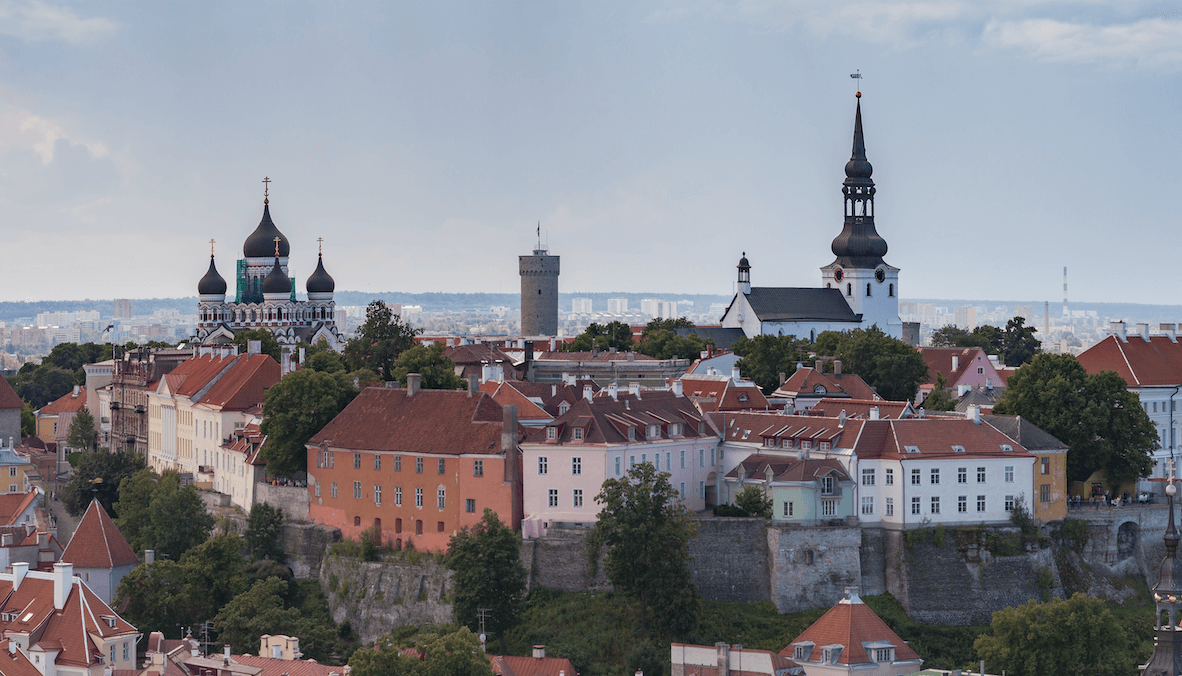
Header Image: (c) Diego Delso