



Black History Month, 1–31 Octobre 2026
By Carolin Gluchowski
Gender Equality and Inclusiveness Officer, PCPSce – Print Culture and Public Spheres in Central Europe
Black History Month
By Carolin Gluchowski
Gender Equality and Inclusiveness Officer, PCPSce – Print Culture and Public Spheres in Central Europe
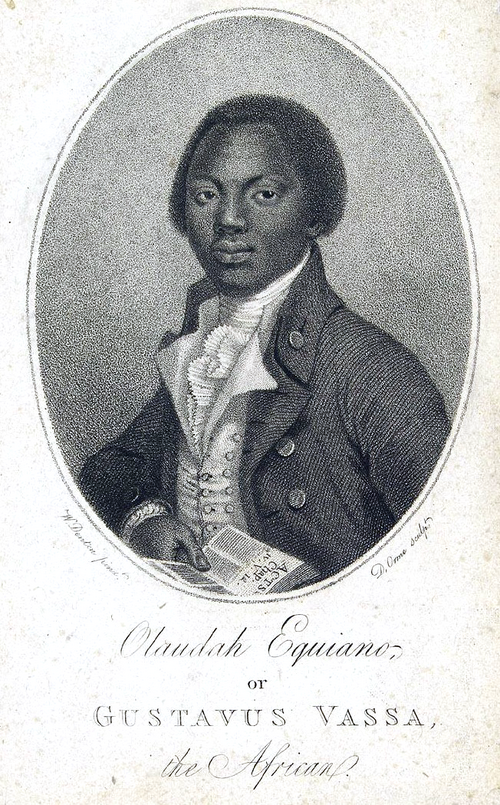
In 1792, a book appeared in Göttingen with a striking promise on its title page. It was the life story of Olaudah Equiano (1745-1797), also known as Gustavus Vassa, and it had been “written by himself”. First published in London three years earlier, Equiano’s Interesting Narrative told of enslavement, travel, religious conversion and the struggle for freedom. Its German translation brought the work of a Black author into a Central European print market—and invites us to ask how Black writers participated in the making of European public spheres.
For Black History Month, Equiano’s story offers an opportunity to look beyond national histories of print. His book travelled through networks of authors, subscribers, translators, publishers and readers connecting Britain, continental Europe, Africa and the Americas. Its journey also reveals that publication could create opportunities for Black authors while leaving them dependent on institutions and conventions shaped by racial inequality.
An author in control
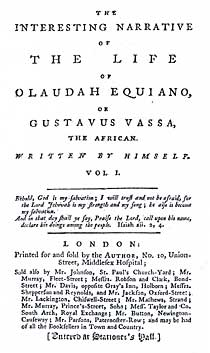
Equiano’s autobiography, The Interesting Narrative of the Life of Olaudah Equiano, or Gustavus Vassa, the African, appeared in London in 1789. In it, he recalled a childhood in West Africa, his abduction and enslavement, and his experiences of the Atlantic slave trade. Having purchased his freedom in 1766, he worked at sea and became active in the campaign against the slave trade.
The Narrative is more than an account of one life. Equiano addressed the British Parliament and challenged readers to confront the violence on which slavery depended. After describing the separation of family members at a sale, he asked how professed Christians could reconcile such cruelty with their faith. The language of personal experience became a means of making a wider political and moral argument.
Equiano also took an active role in bringing his book to readers. He published it by subscription: people paid in advance for copies, helping to fund its production. The title page stated that it was printed for and sold by the author. He promoted the book through journeys across Britain and Ireland, combining sales with public advocacy against the slave trade.
His networks included other Black writers and campaigners. Among the book’s subscribers were the abolitionist Ottobah Cugoano and William Sancho, son of the writer Ignatius Sancho. Equiano’s career thus belonged to a wider world of Black intellectual and political activity. As the literary scholar John Bugg has shown, the author’s public appearances were central to the book’s reach and to his campaign.
From London to Göttingen
The book’s journey did not end with its English-language editions. A Dutch translation appeared in 1790, followed by a German version in 1792 and a Russian translation in 1794. The German edition was published in Göttingen by the bookseller Johann Christian Dieterich (1722-1800). Its translator was Georg Friedrich Benecke (1762-1844), a scholar associated with the university. On the German title page, too, readers encountered the claim that the life had been written by its subject: von ihm selbst geschrieben.
The Göttingen edition emerged from a network in which scholars, booksellers and periodicals helped to introduce works to new audiences. In 1790, the Göttingen scholar Johann Friedrich Blumenbach (1752-1840) had reviewed the English Narrative in the Göttingische Anzeigen von gelehrten Sachen. The journal was published by Dieterich, who would later publish the translation. In his preface, Benecke drew attention to the book’s success in English and Dutch as a reason for making it available in German. As Tim Sommer’s recent research shows, translation was central to the circulation of Black writing in this period, but translators and reviewers also influenced how that writing was understood.
The German version was published without Equiano’s authorisation. In a later English edition, he recorded that he was glad to learn that his book had appeared in Germany and elsewhere. His pleasure at its circulation does not, however, tell us that he had approved the translation or shared in its proceeds. The contrast with the editions he organised himself raises a question for historians of the book: who benefited when a text crossed linguistic and commercial borders?
The terms of recognition
Equiano’s writing reached Central European readers through institutions that did not approach questions of race neutrally. Blumenbach used works by Black authors as evidence against claims of African intellectual inferiority. Yet he also contributed to the classification of human beings into racial groups. His engagement with Black writing therefore belongs to a history in which arguments about shared humanity coexisted with emerging racial categories.
A later list of Blumenbach’s collection records an English edition of Equiano’s Narrative alongside the poetry of Phillis Wheatley Peters (1753-1784). Wheatley Peters had been enslaved in Boston when her Poems on Various Subjects, Religious and Moral appeared in London in 1773. Her volume shows how race, gender and enslavement shaped access to publication. It included an attestation signed by eighteen prominent Boston men affirming that they believed she was capable of writing the poems. Such testimony helped present her work to readers, but it also exposed the suspicion surrounding her authorship. Recent scholarship by Claudia Cornelissen draws attention to Wheatley Peters’s own poetic responses to that framing, including her use of classical traditions to claim literary authority.
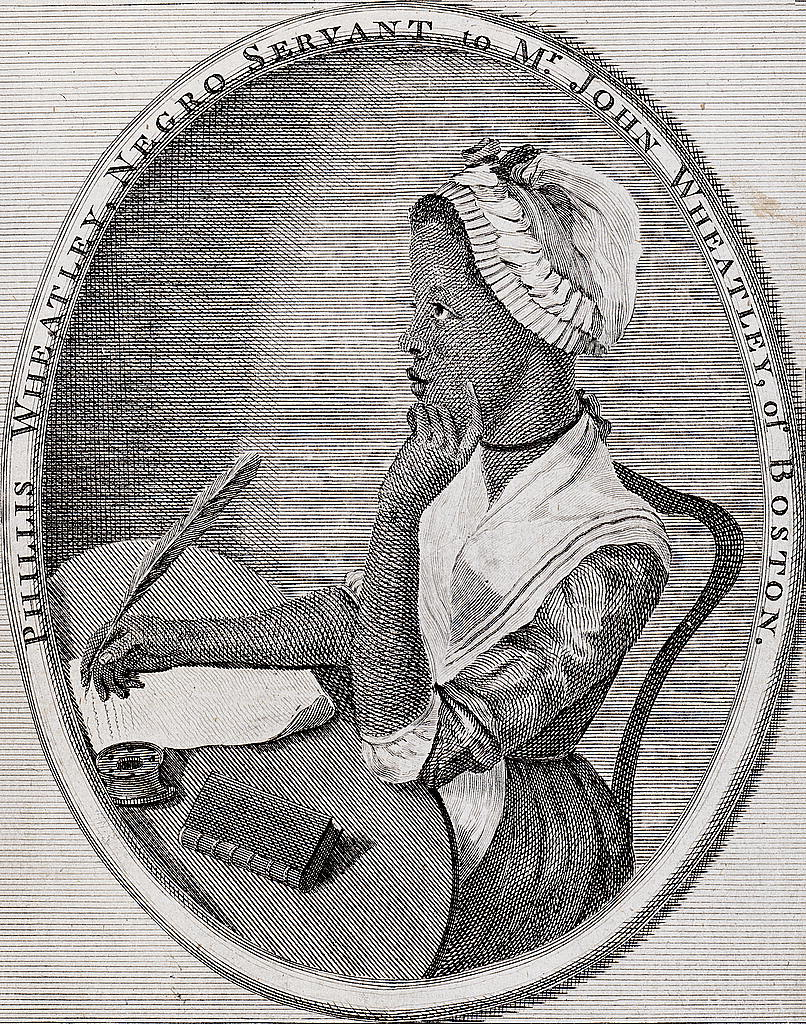
Equiano and Wheatley Peters faced different circumstances and worked in different genres. Both nevertheless prompt us to look closely at the material surrounding a text: title pages, portraits, dedications, attestations, subscription lists and prefaces. These features could make a work visible, but they also shaped the terms on which its author was recognised.
Rethinking Central European print history
Equiano’s German translation demonstrates that Central European print culture was connected to the history of the Atlantic world. Those connections were economic and political as well as literary: people and institutions in German territories participated in networks linked to slavery and the slave trade.
Black people also lived, studied and wrote in Central Europe itself. One example is the philosopher Anton Wilhelm Amo (1703-1759), who studied and taught at universities including Halle and Wittenberg. His philosophical dissertations were published in Wittenberg in 1734; they, too, later appeared in Blumenbach’s list. Their history reminds us that Black intellectual contributions were part of European scholarly life as well as transatlantic print culture.
For PCPSce, these histories open up important questions. Who had the resources and networks to enter print? How did publishers and readers judge an author’s authority? What happened to a work when it was translated, collected or presented as evidence in a debate? The surviving books offer valuable answers, but they also reflect unequal access to the press. Many enslaved people were denied the education, resources and freedom needed to publish. Reading the works that survive therefore means attending both to the achievements of their authors and to the conditions that shaped the archive.
Equiano’s Narrative crossed borders because its author worked to put it into readers’ hands—and because others translated, published, reviewed and collected it. Following that journey makes Black authorship part of the history of how European public spheres were formed.
Selected sources and further reading
Primary sources
- Equiano, Olaudah. The Interesting Narrative of the Life of Olaudah Equiano, or Gustavus Vassa, the African. London: printed for the author, 1789. Digital version of the first edition, The Equiano Society.
- Equiano, Olaudah. Olaudah Equiano’s oder Gustav Wasa’s, des Afrikaners merkwürdige Lebensgeschichte von ihm selbst geschrieben. Translated by Georg Friedrich Benecke. Göttingen: Johann Christian Dieterich, 1792. Heidelberg Translation Bibliography record.
- Johann Friedrich Blumenbach’s review of Equiano, 1790, and the Blumenbach Online account of his collection of writings by non-European authors.
Scholarship
- Bugg, John. “The Other Interesting Narrative: Olaudah Equiano’s Public Book Tour.” PMLA 121, no. 5 (2006): 1424–1442. DOI.
- Cornelissen, Claudia J. M. “Classicism, Literary Authority, and Black Artistic Community in Phillis Wheatley Peters’s Poems on Various Subjects, Religious and Moral.” The Review of English Studies (2026). DOI.
- Köstlbauer, Josef. “Slavery in the Holy Roman Empire.” In The Palgrave Handbook of Global Slavery throughout History, edited by Damian A. Pargas and Juliane Schiel. Cham: Palgrave Macmillan, 2023. DOI.
- Menn, Stephen, and Justin E. H. Smith. Anton Wilhelm Amo’s Philosophical Dissertations on Mind and Body. Oxford: Oxford University Press, 2020. DOI.
- Rezek, Joseph. “The Racialization of Print.” American Literary History 32, no. 3 (2020): 417–445. DOI.
- Sommer, Tim. “Foreign Languages, Marginal Voices: Early Black Poetry and Prose in Dutch, English, French, German, and Russian Translation, 1770–1810.” European Romantic Review 37, no. 1 (2026): 91–110. DOI.